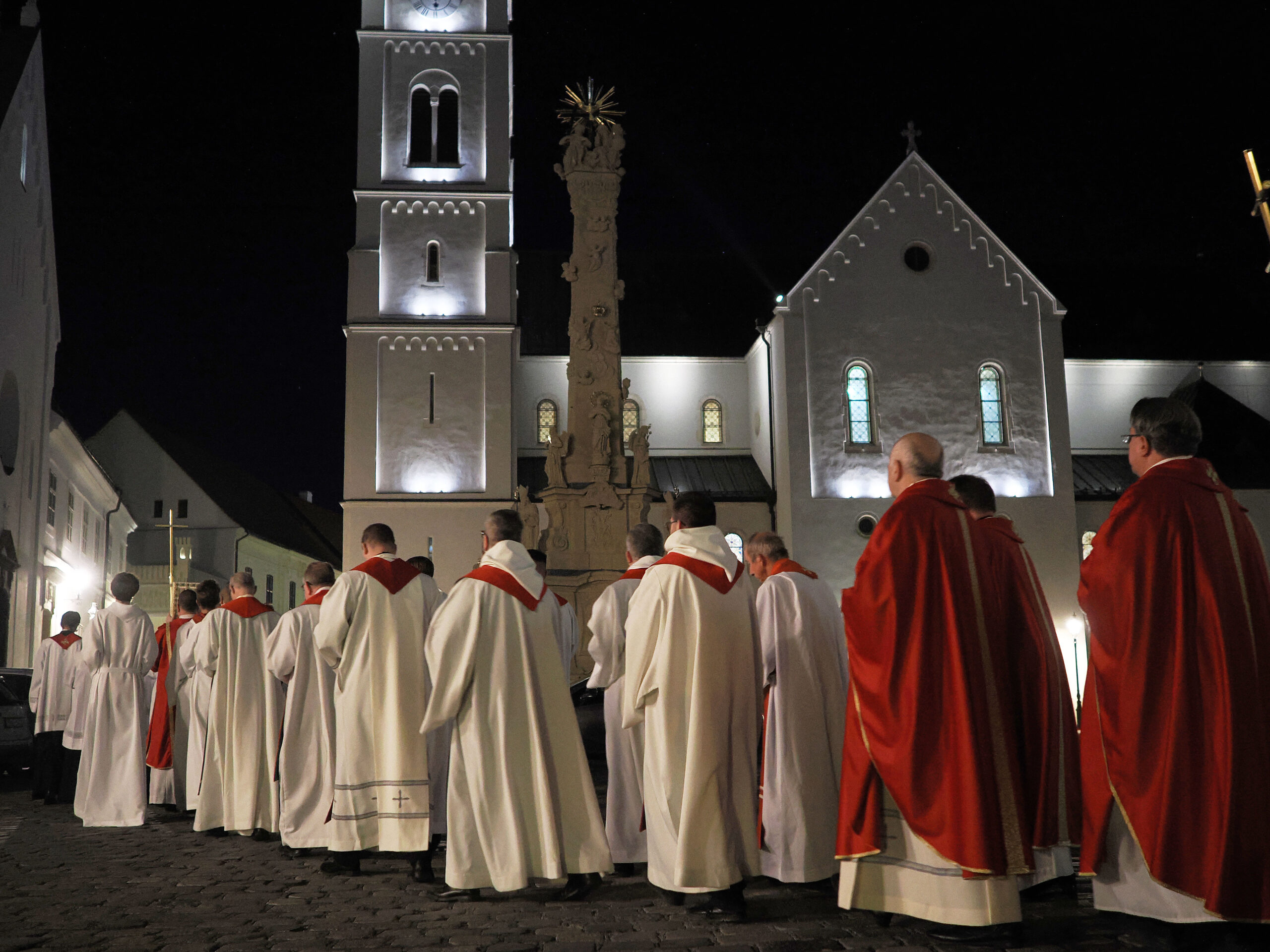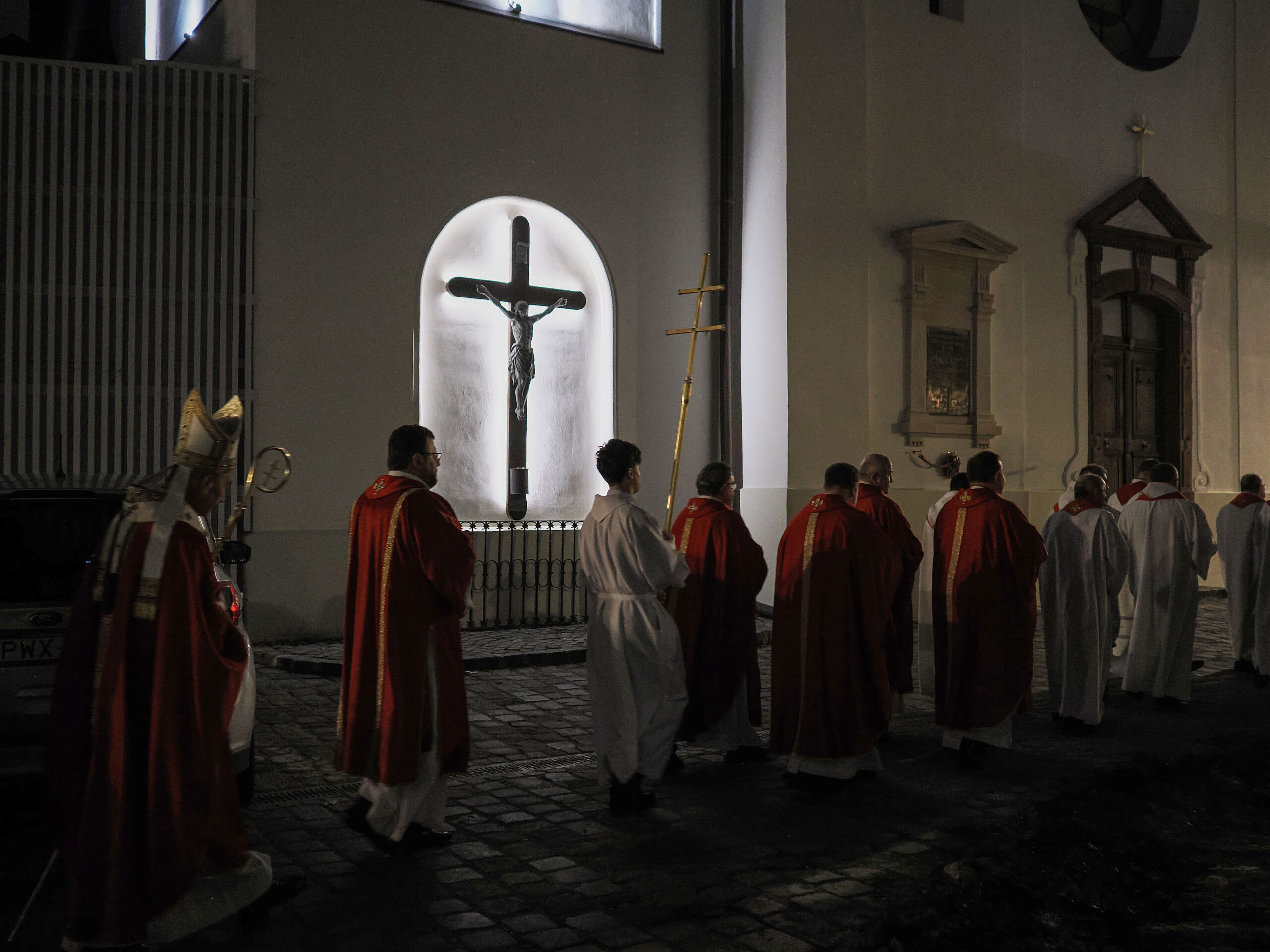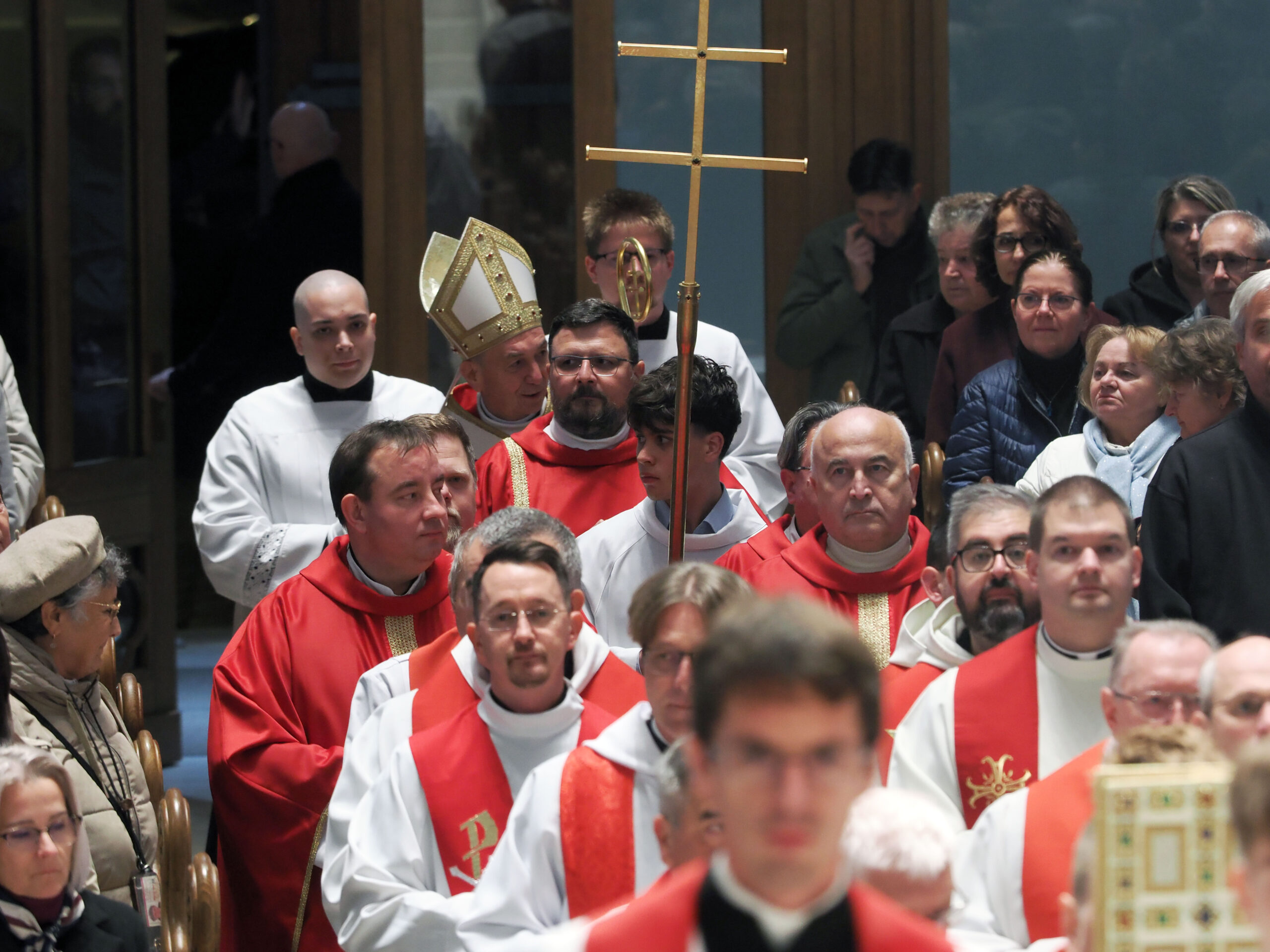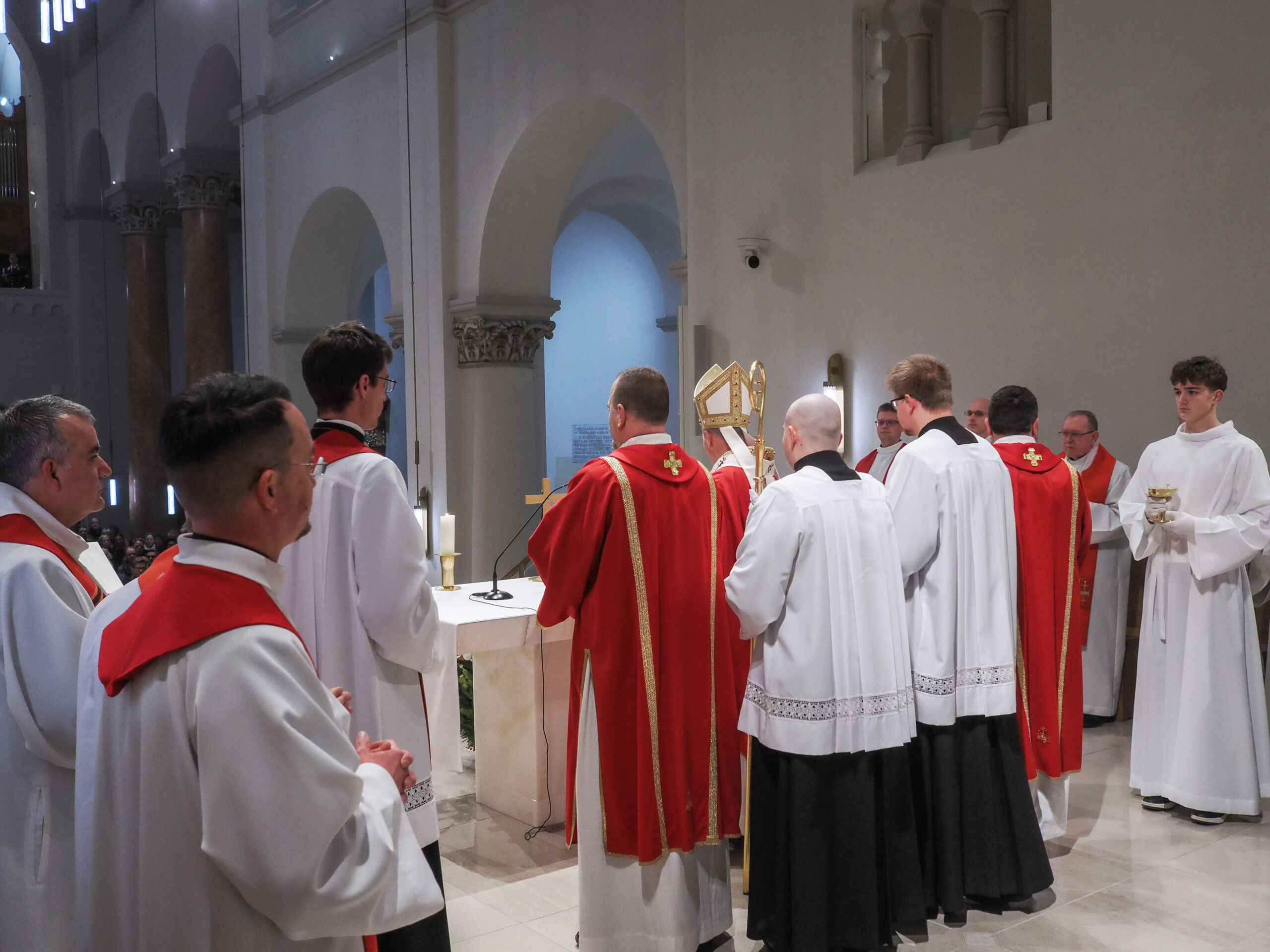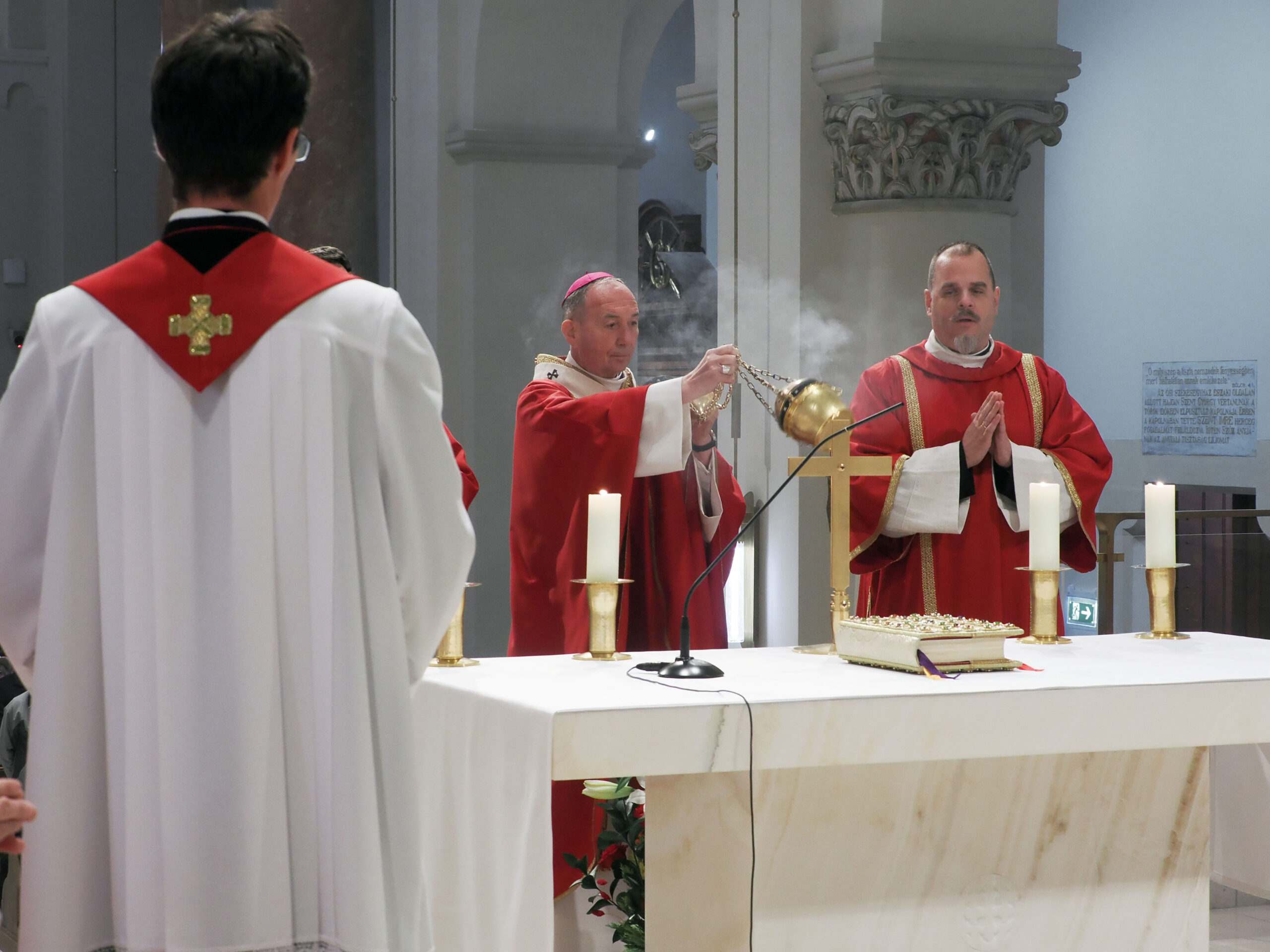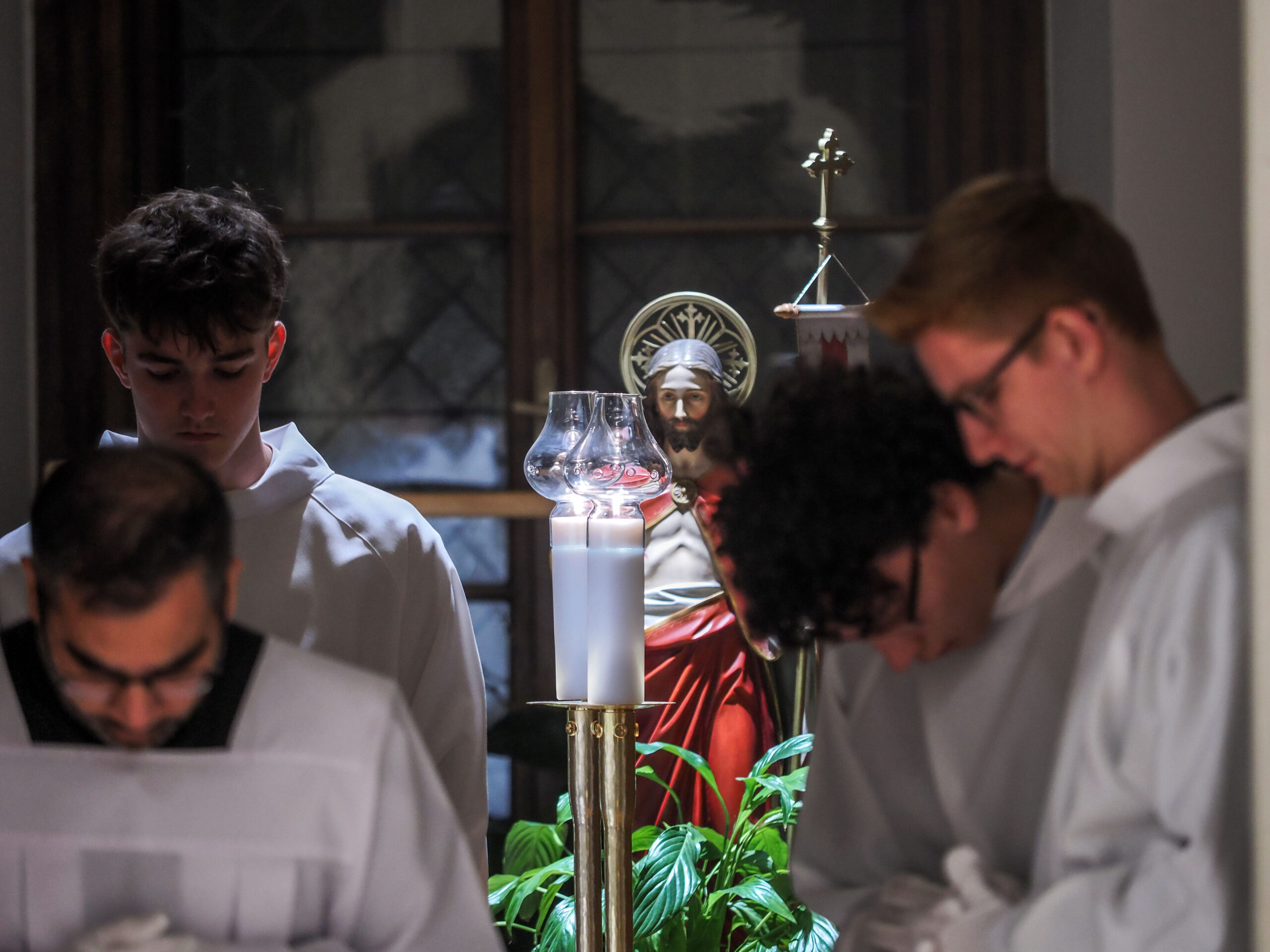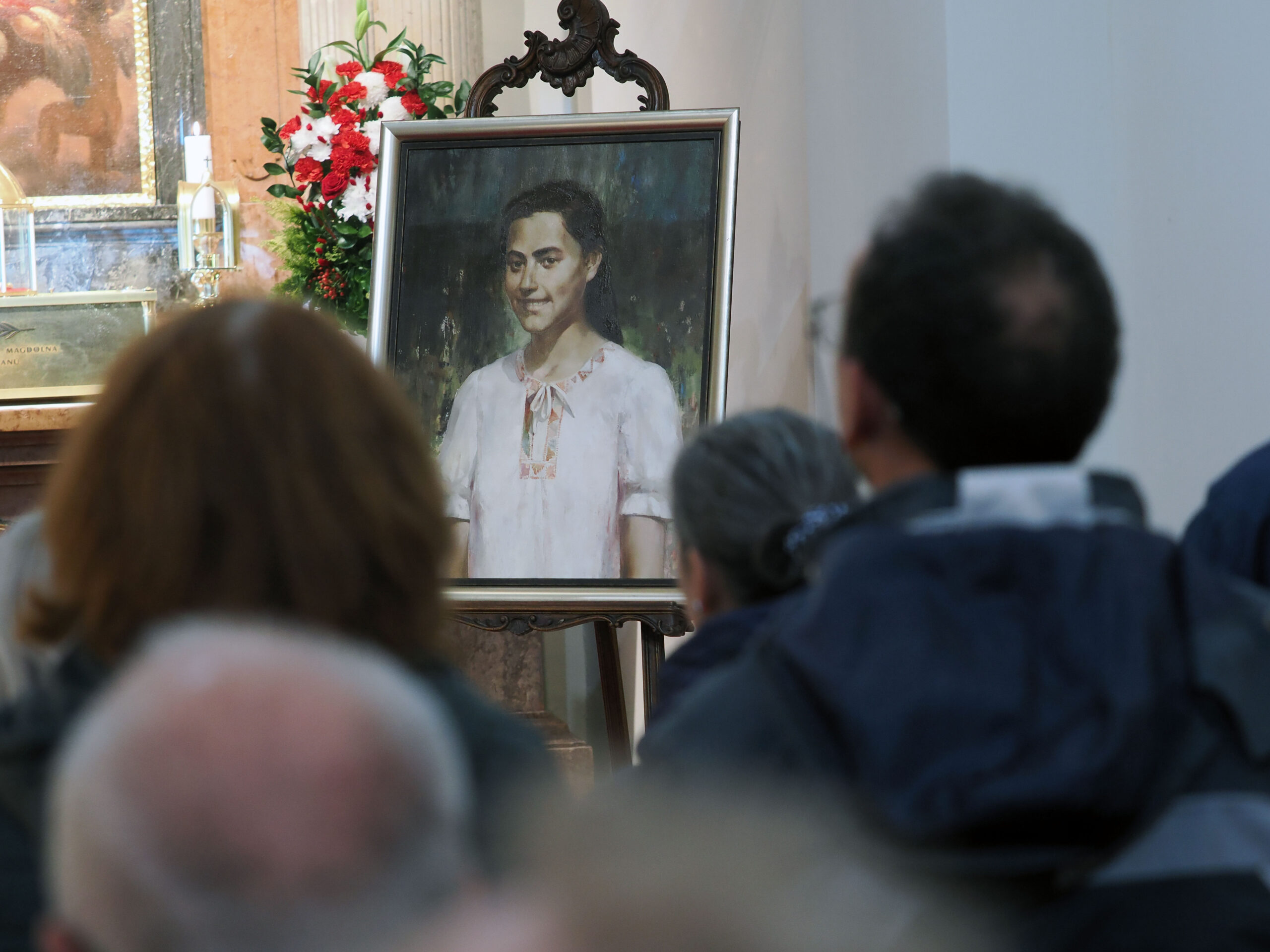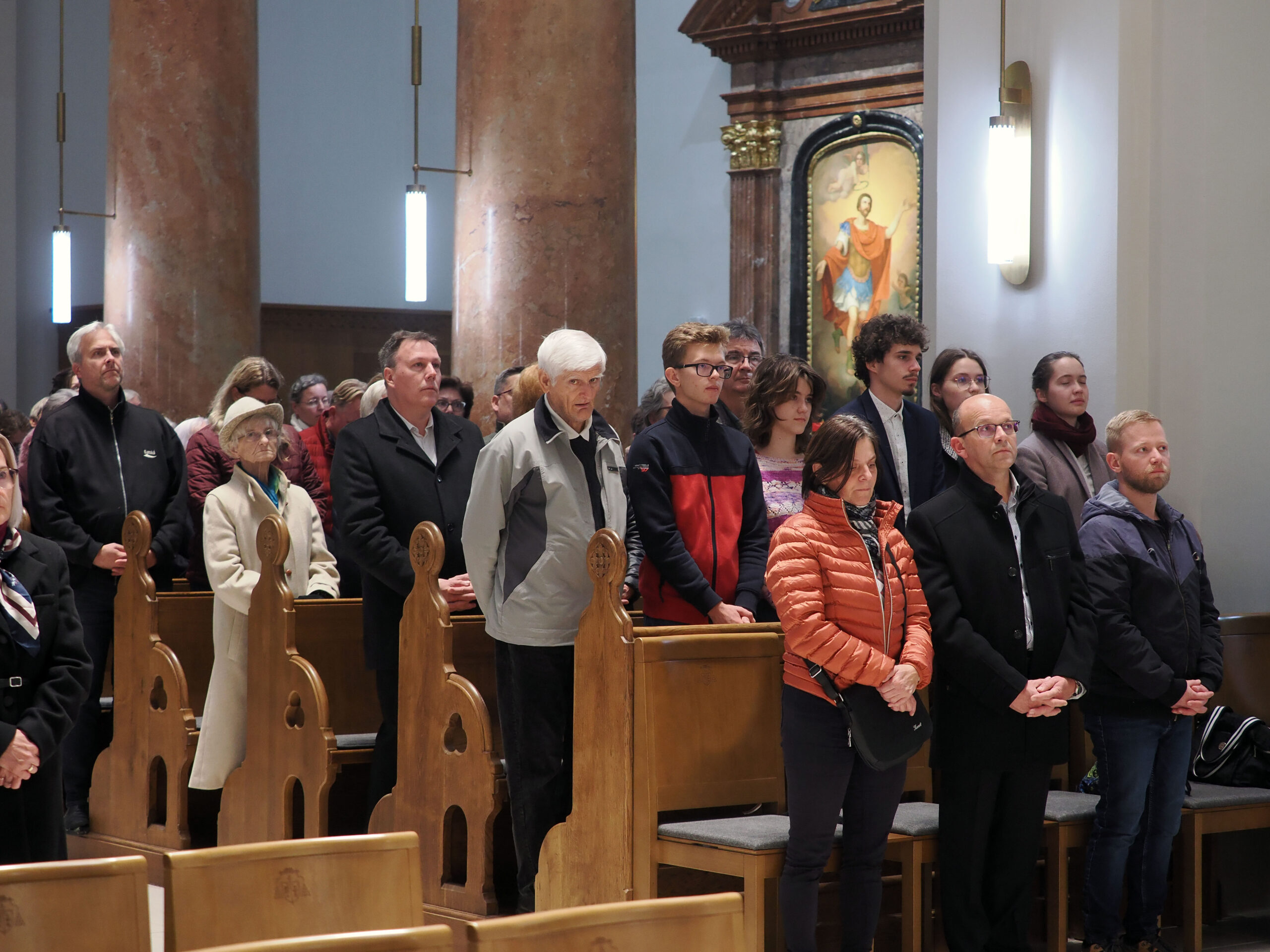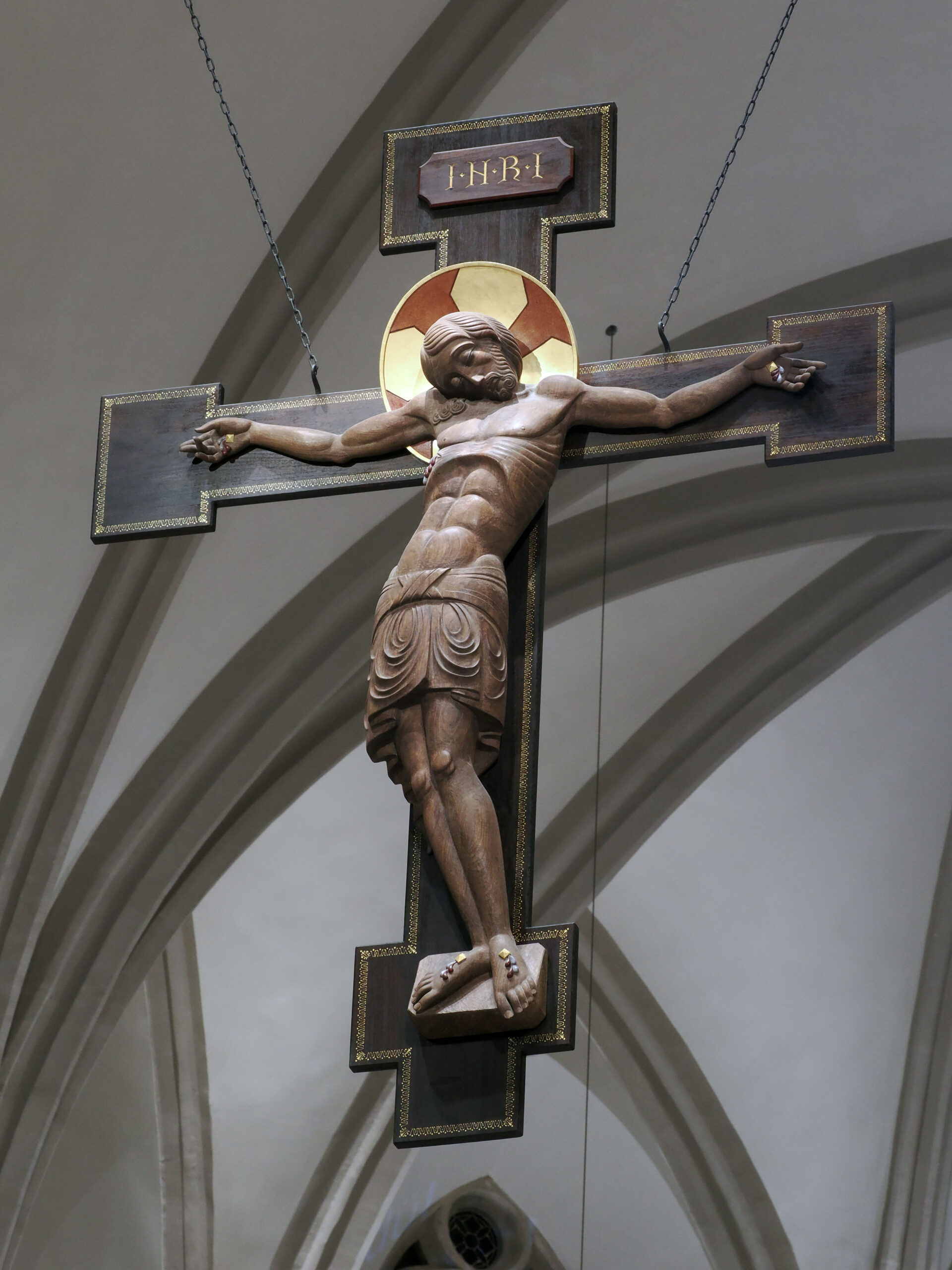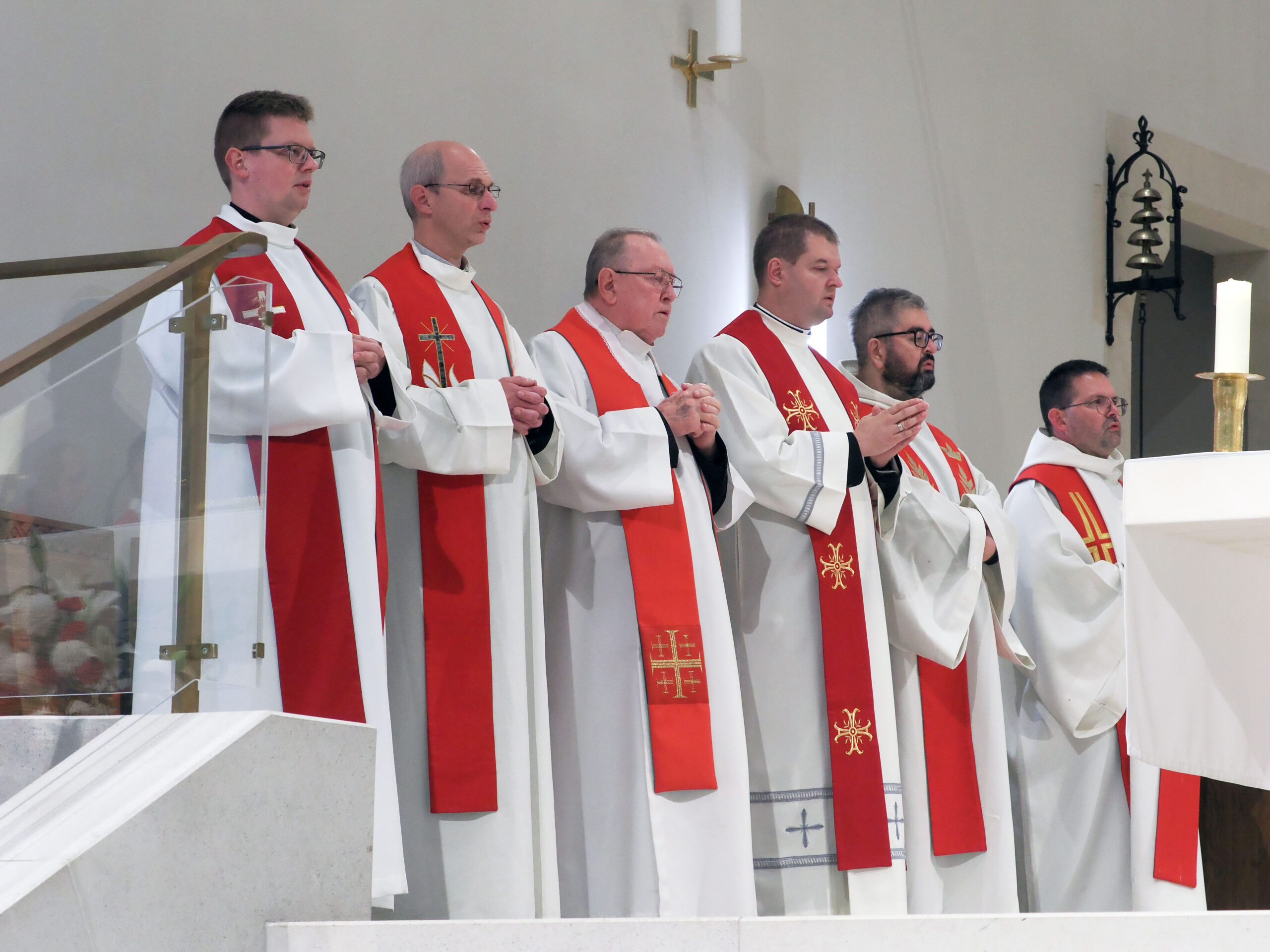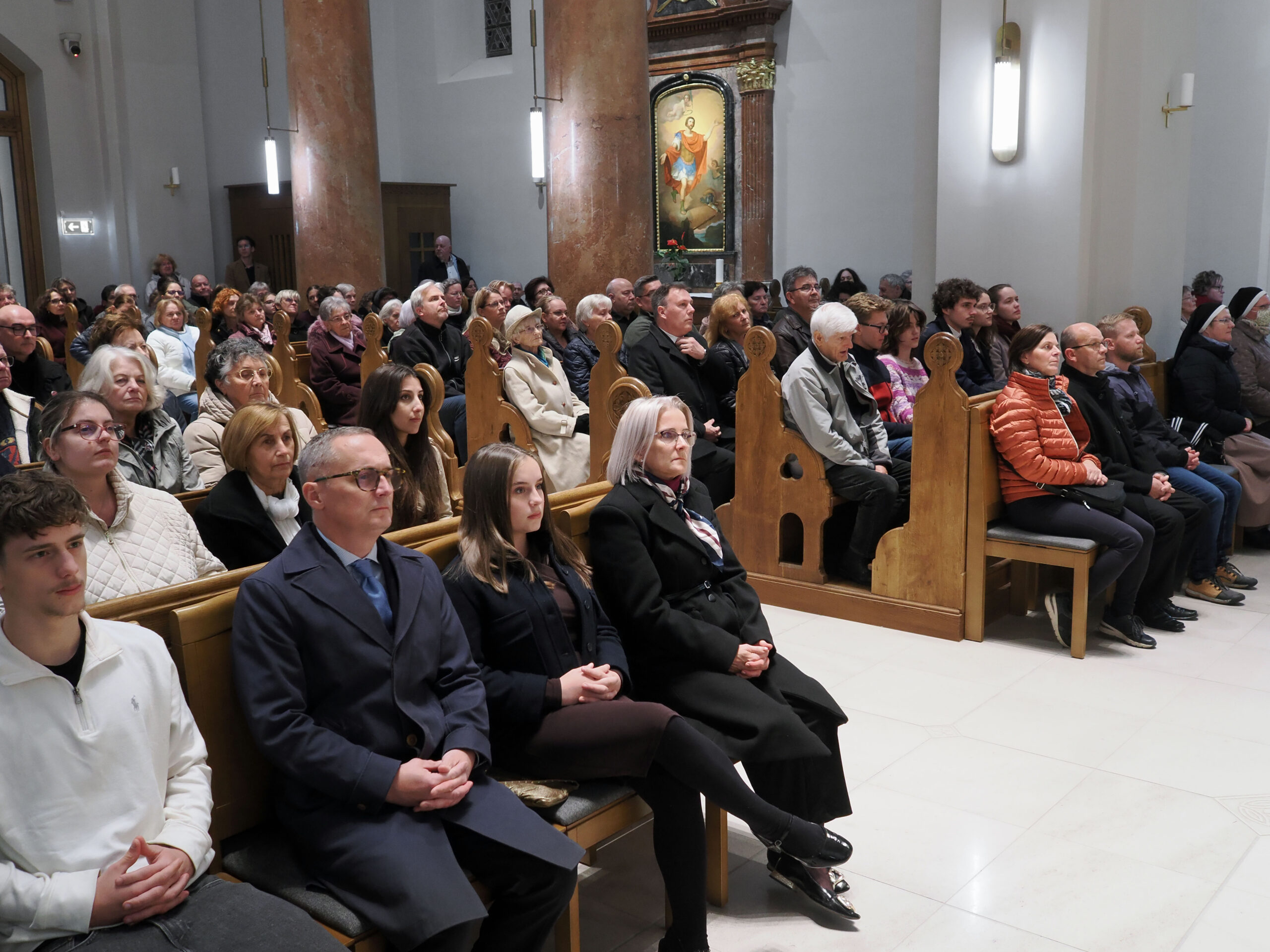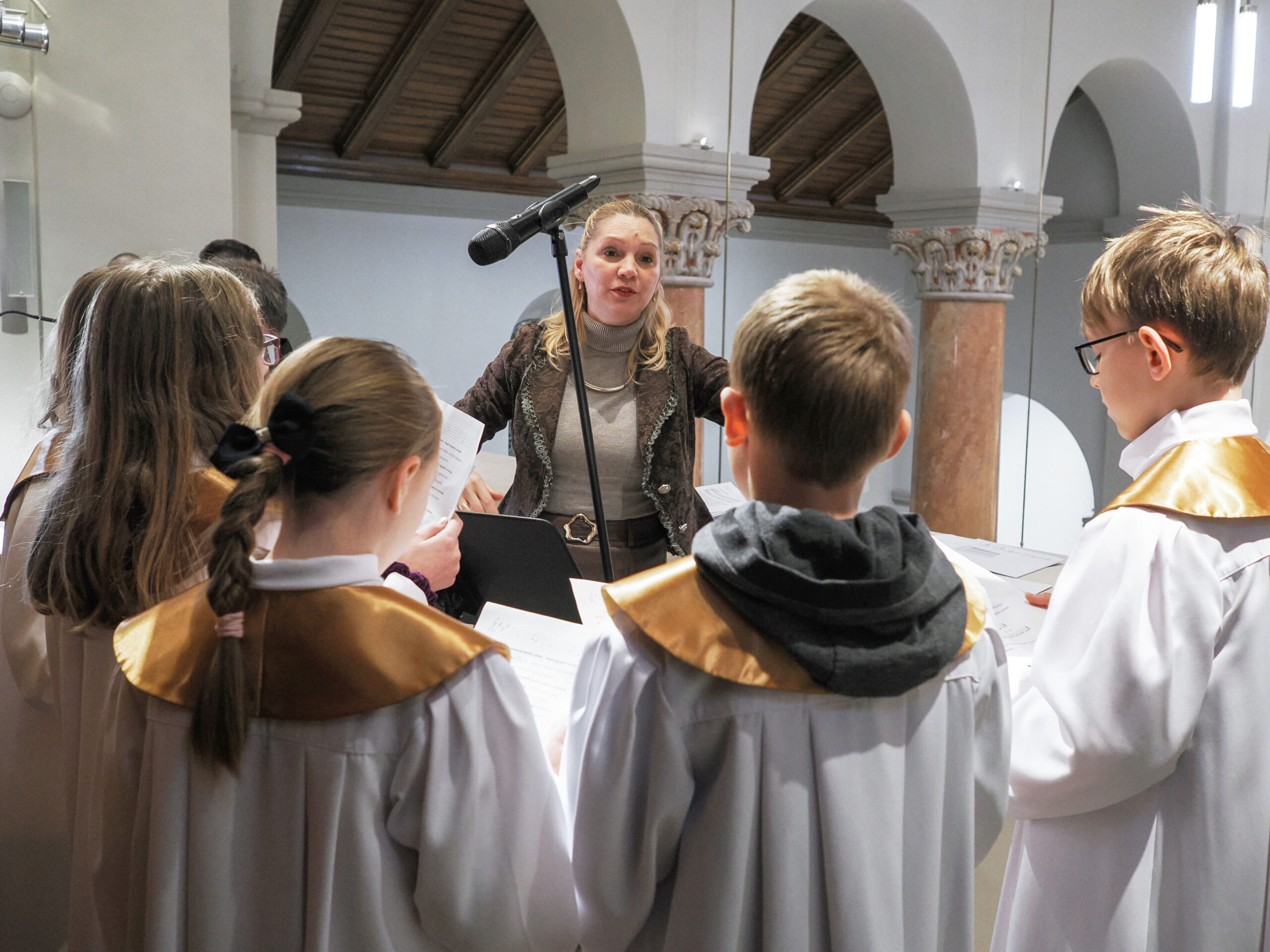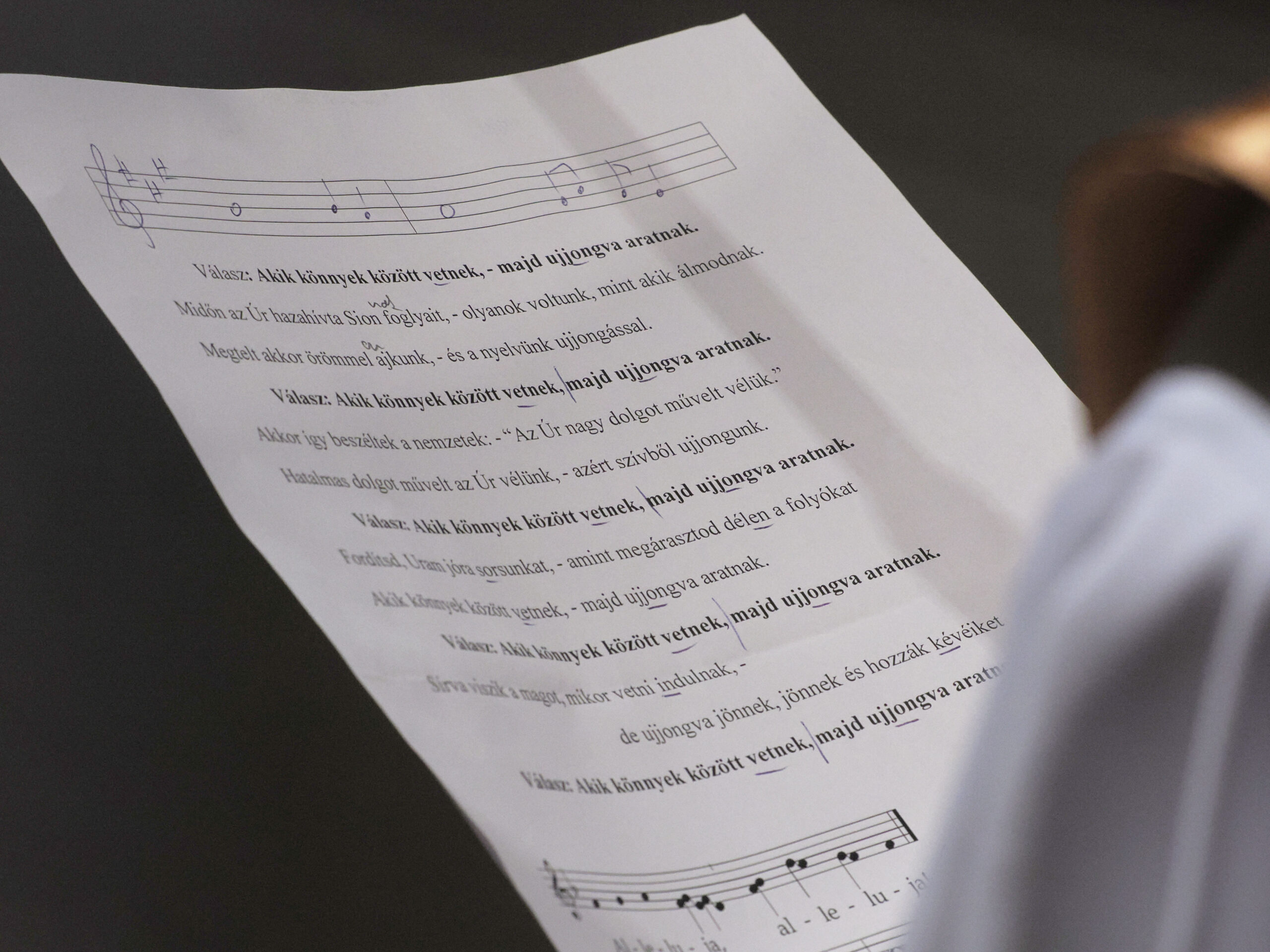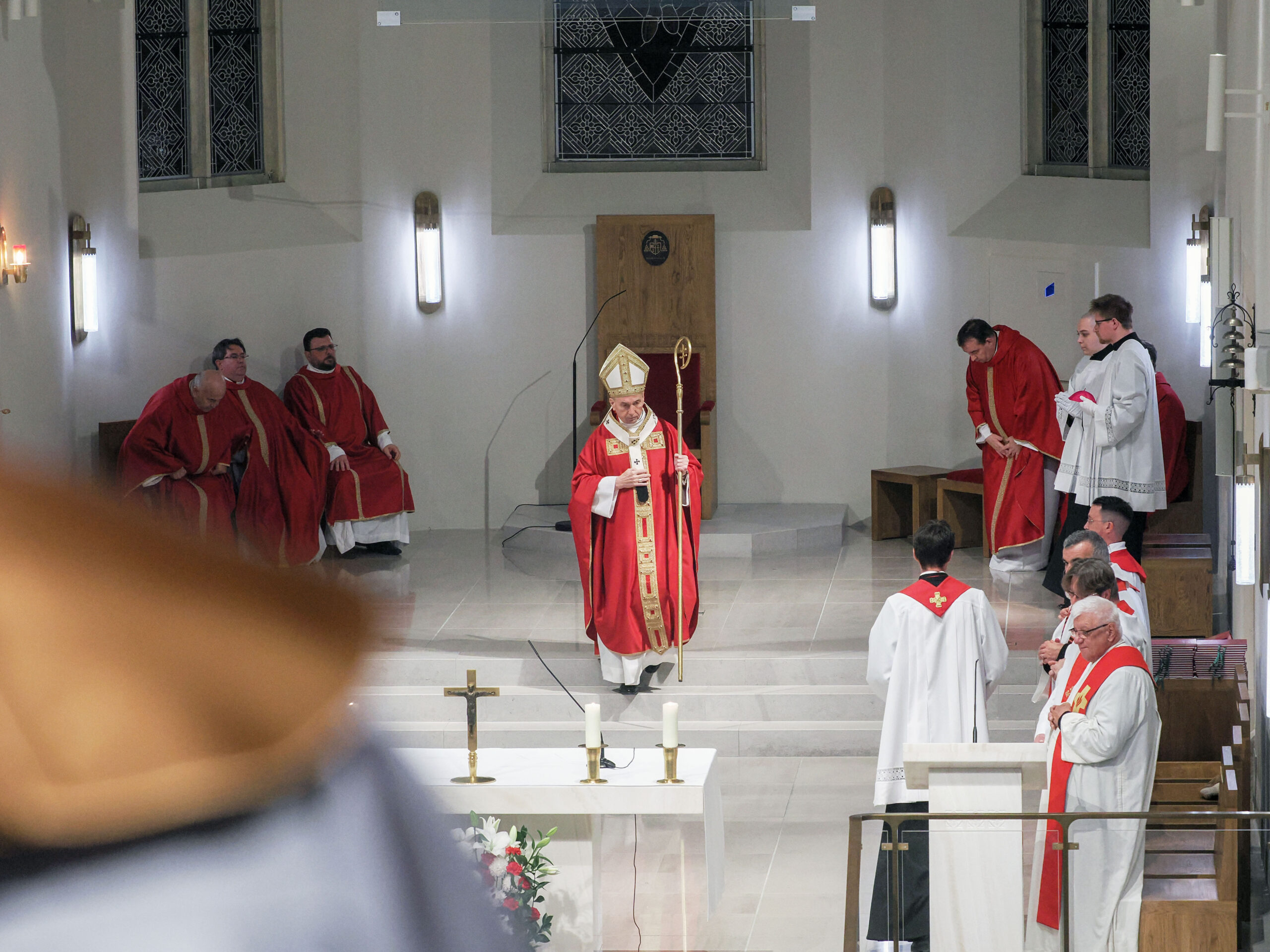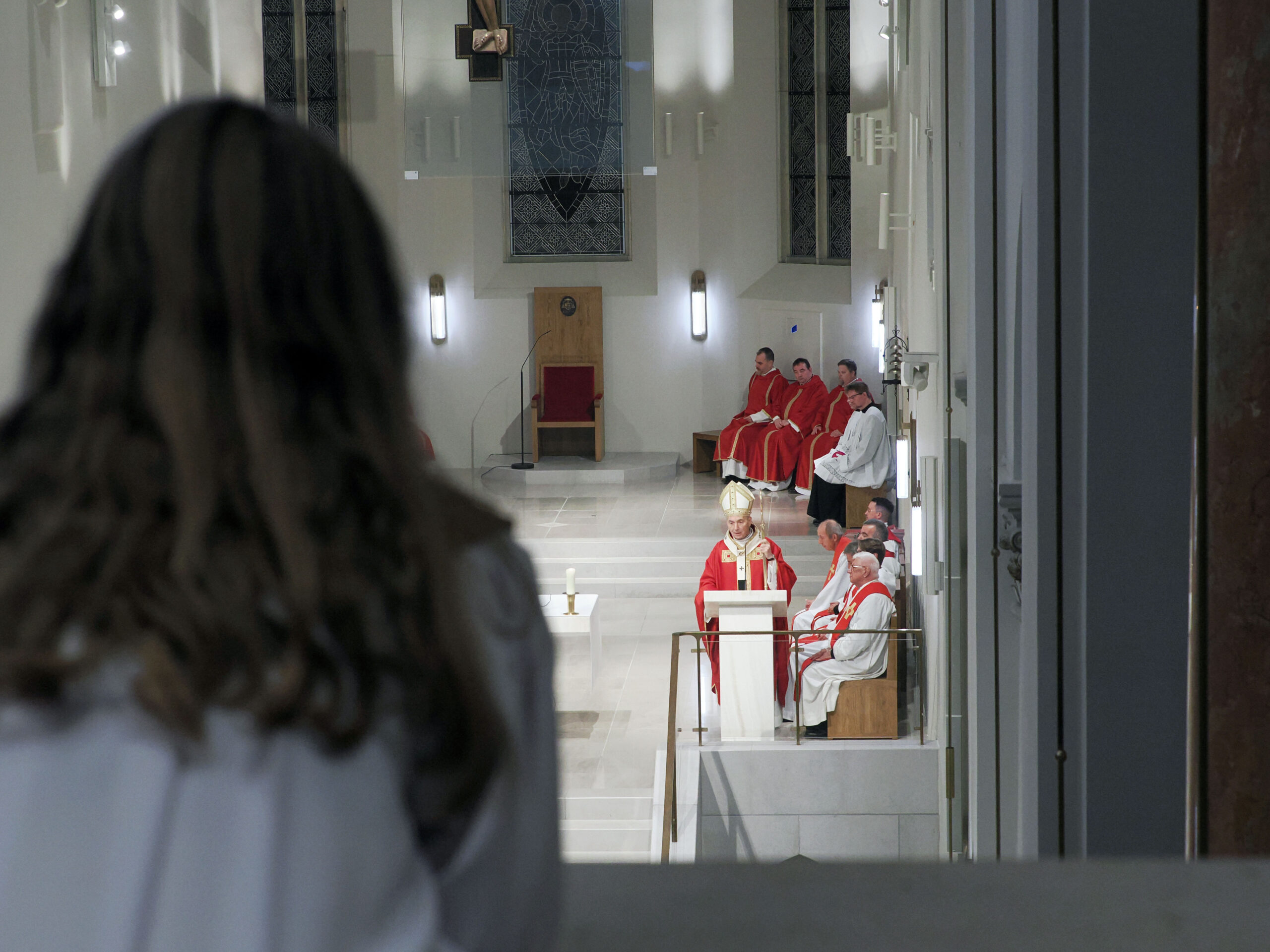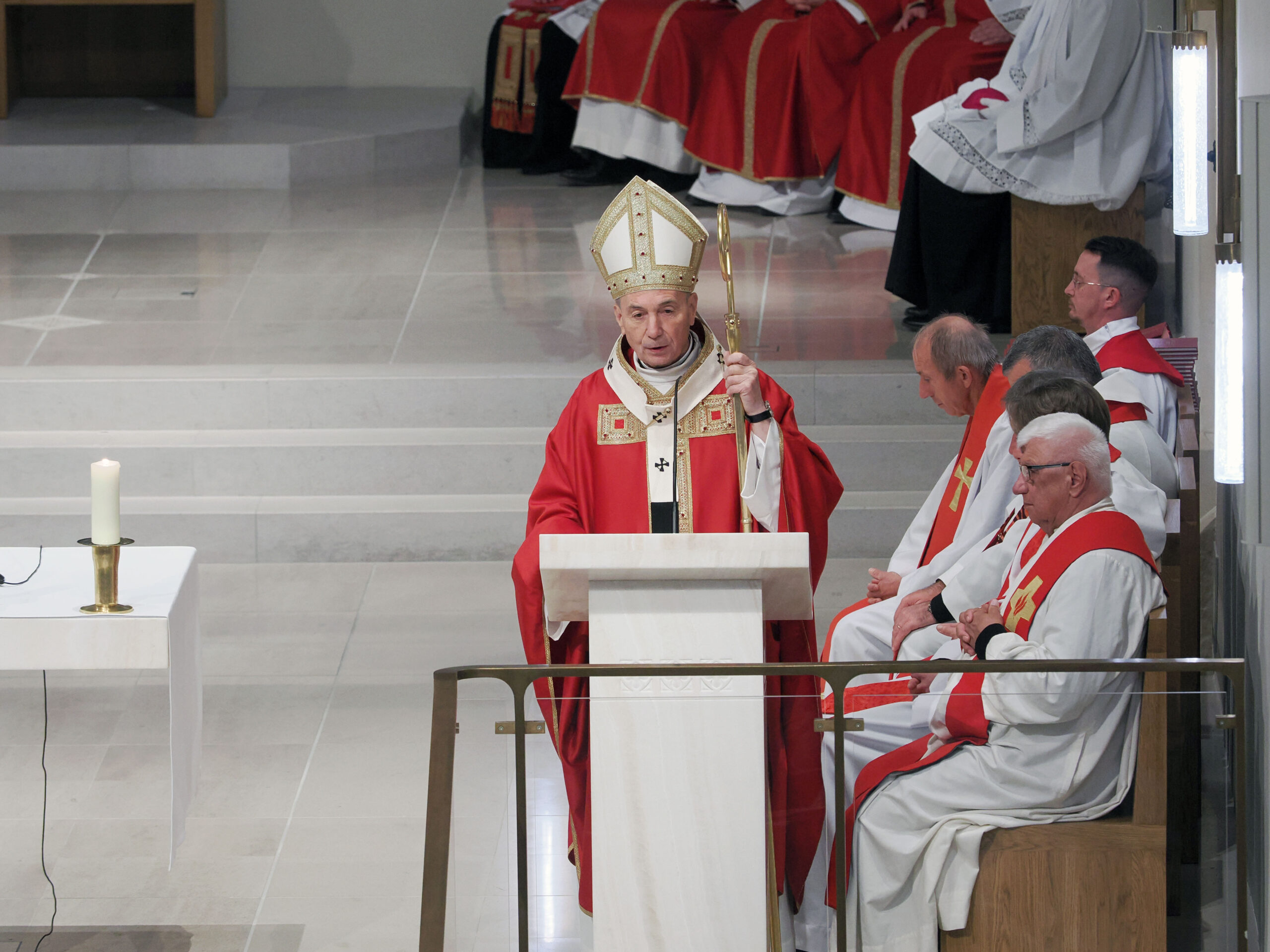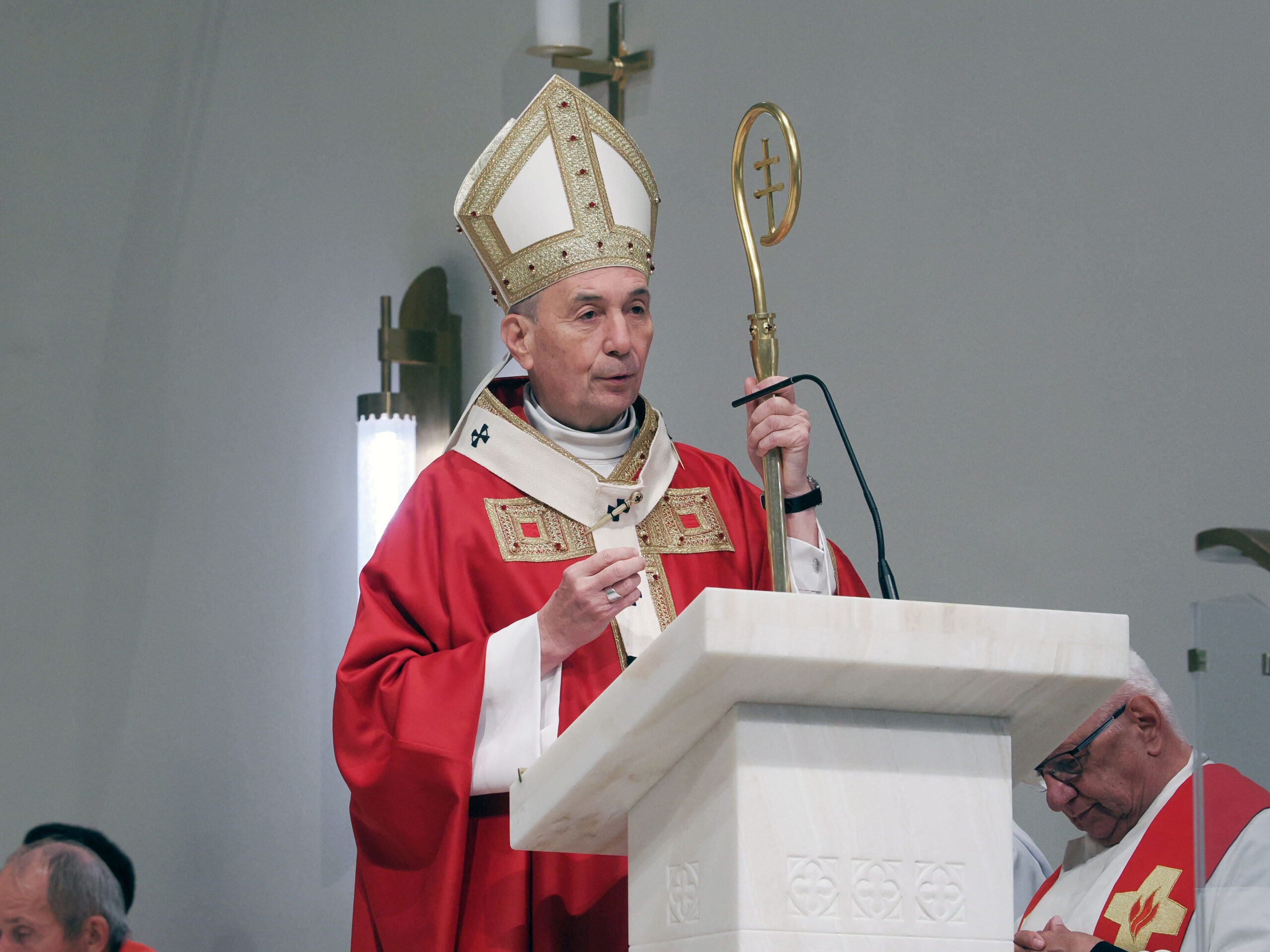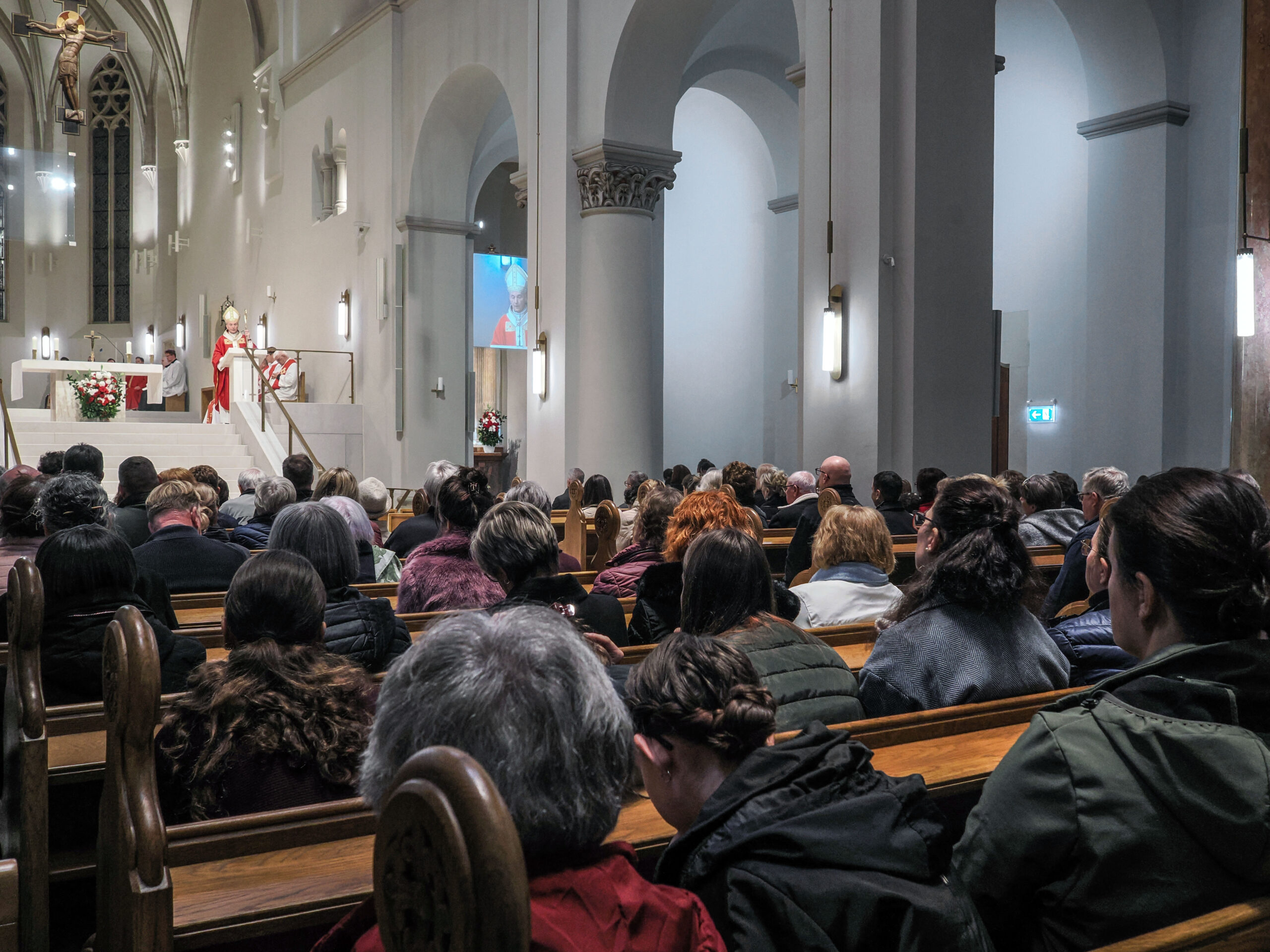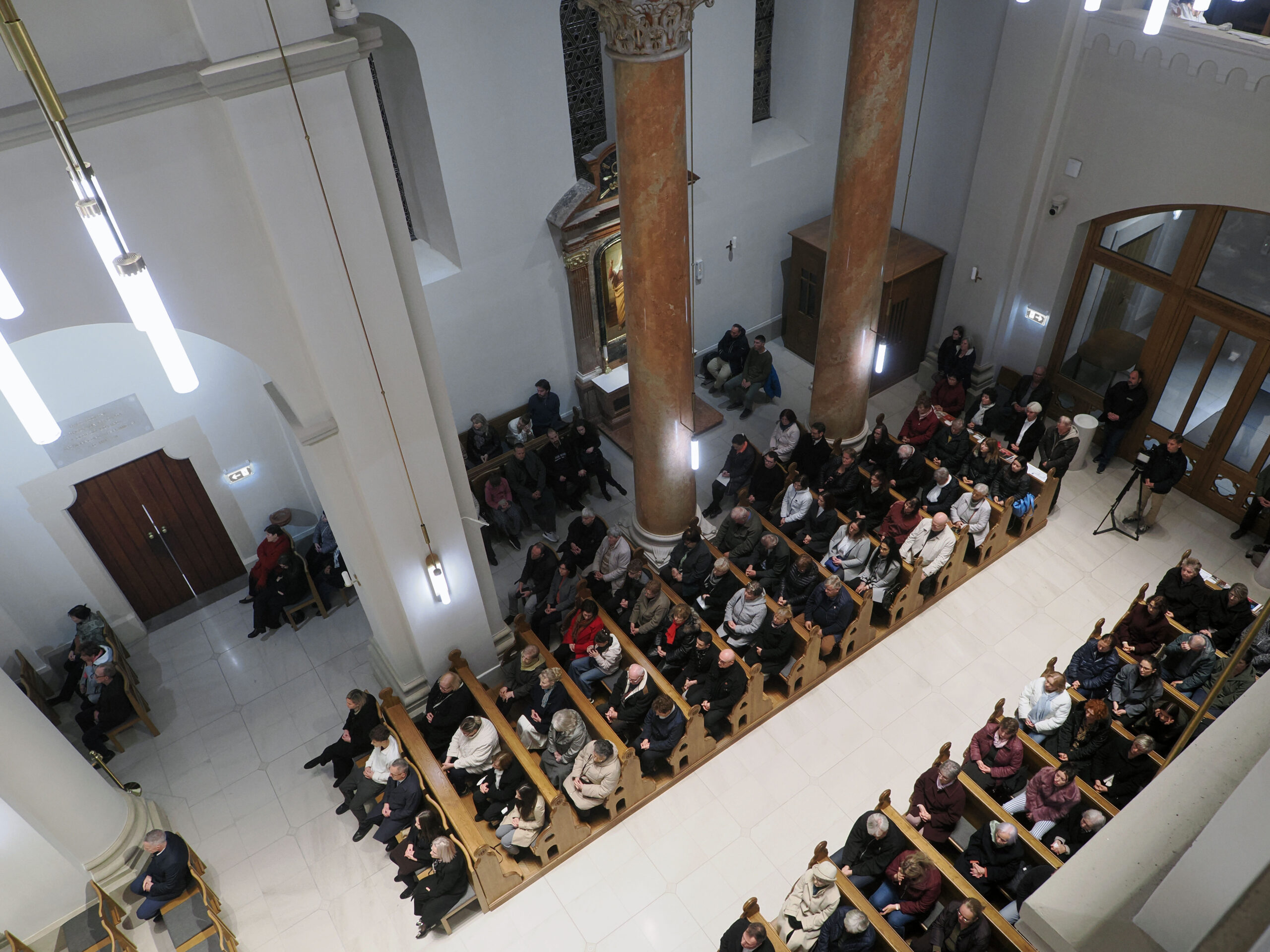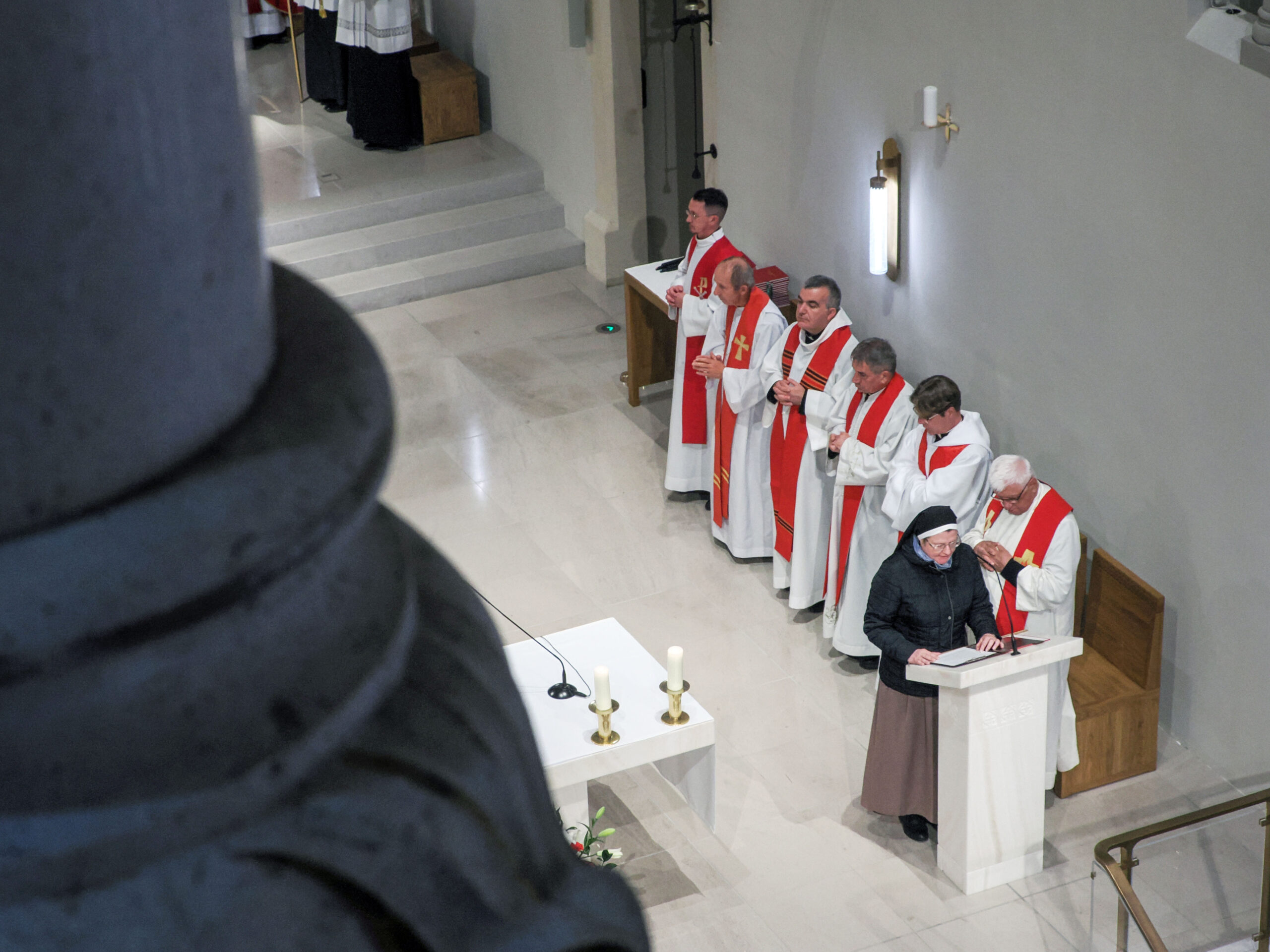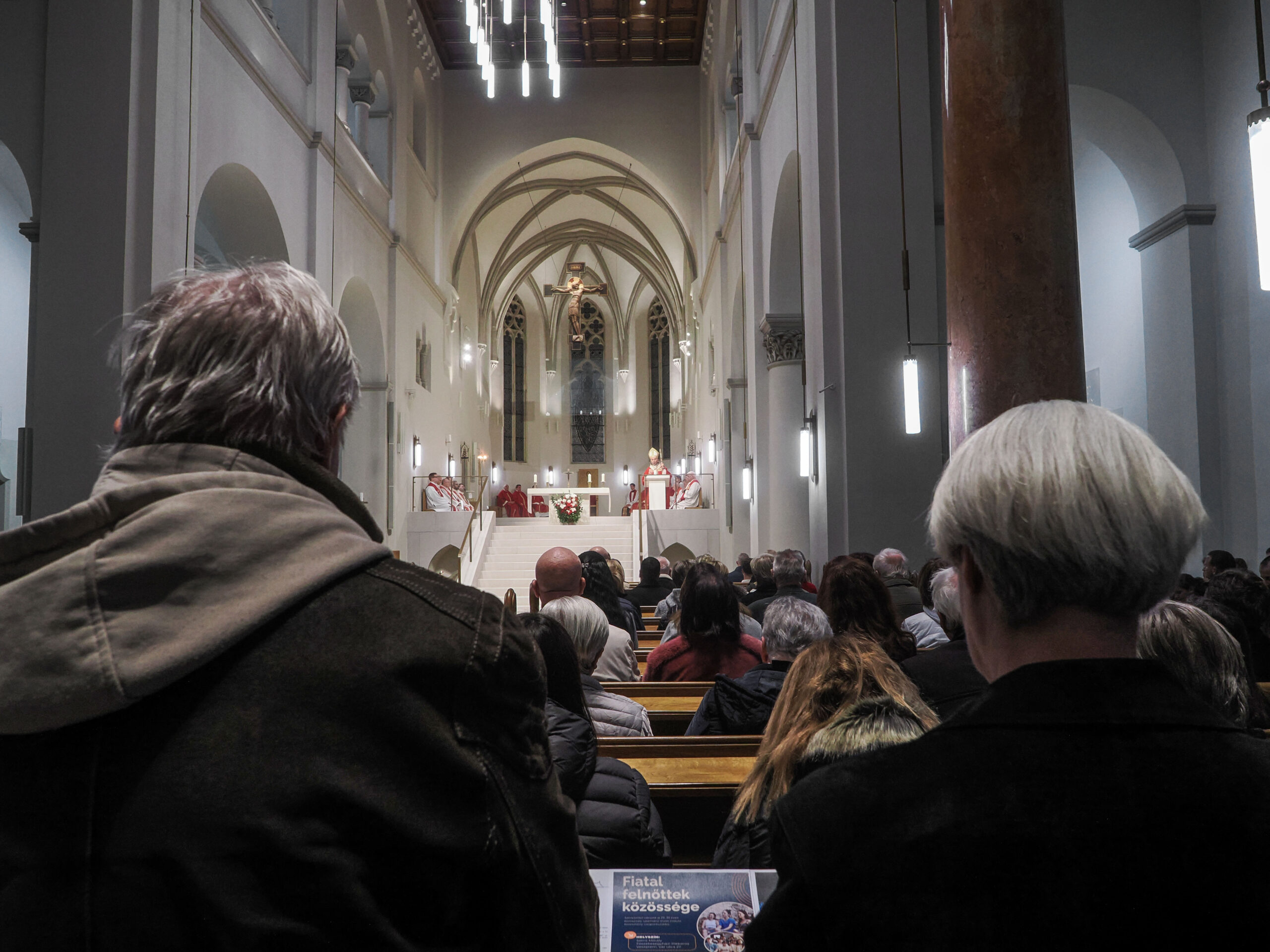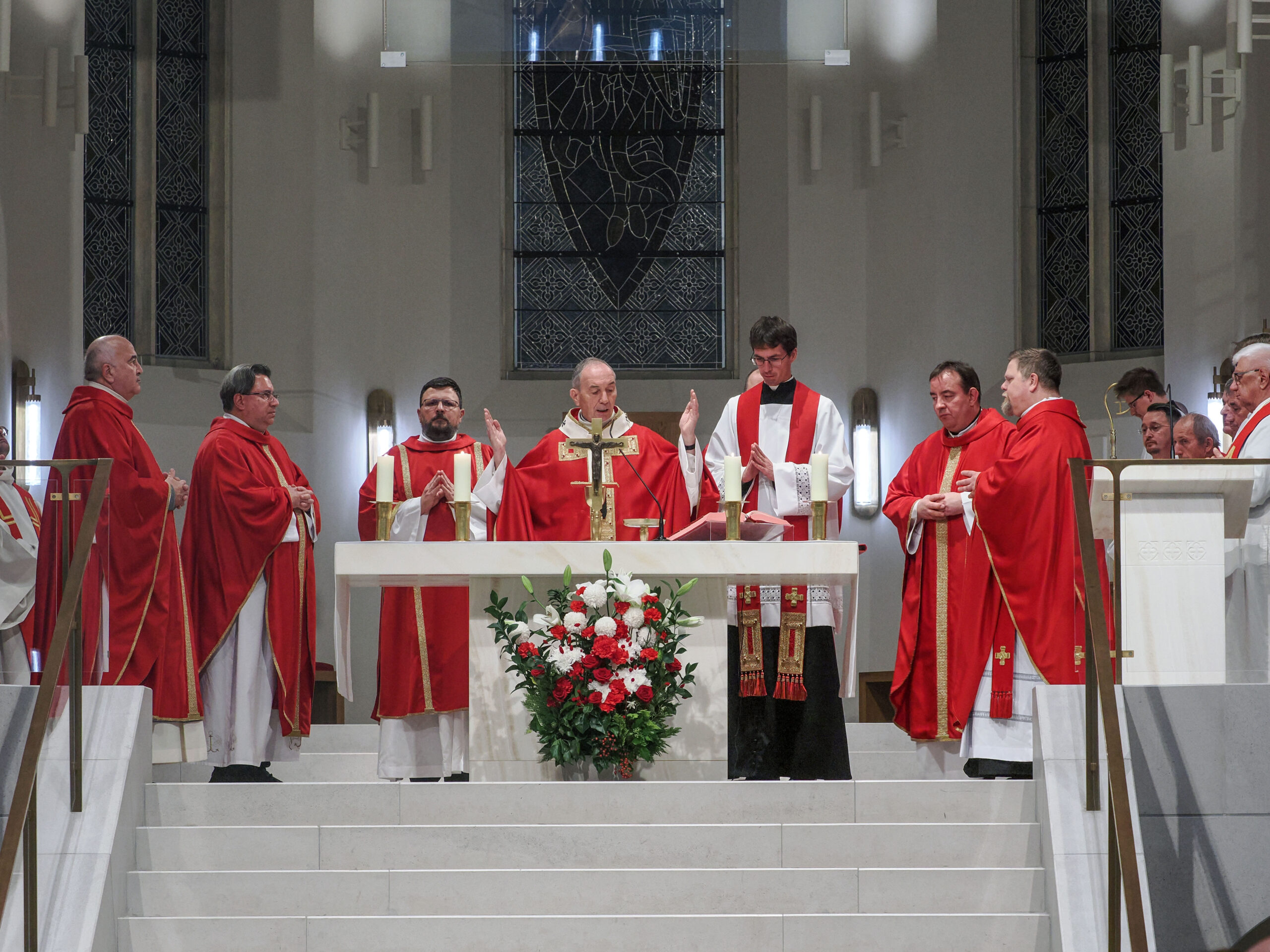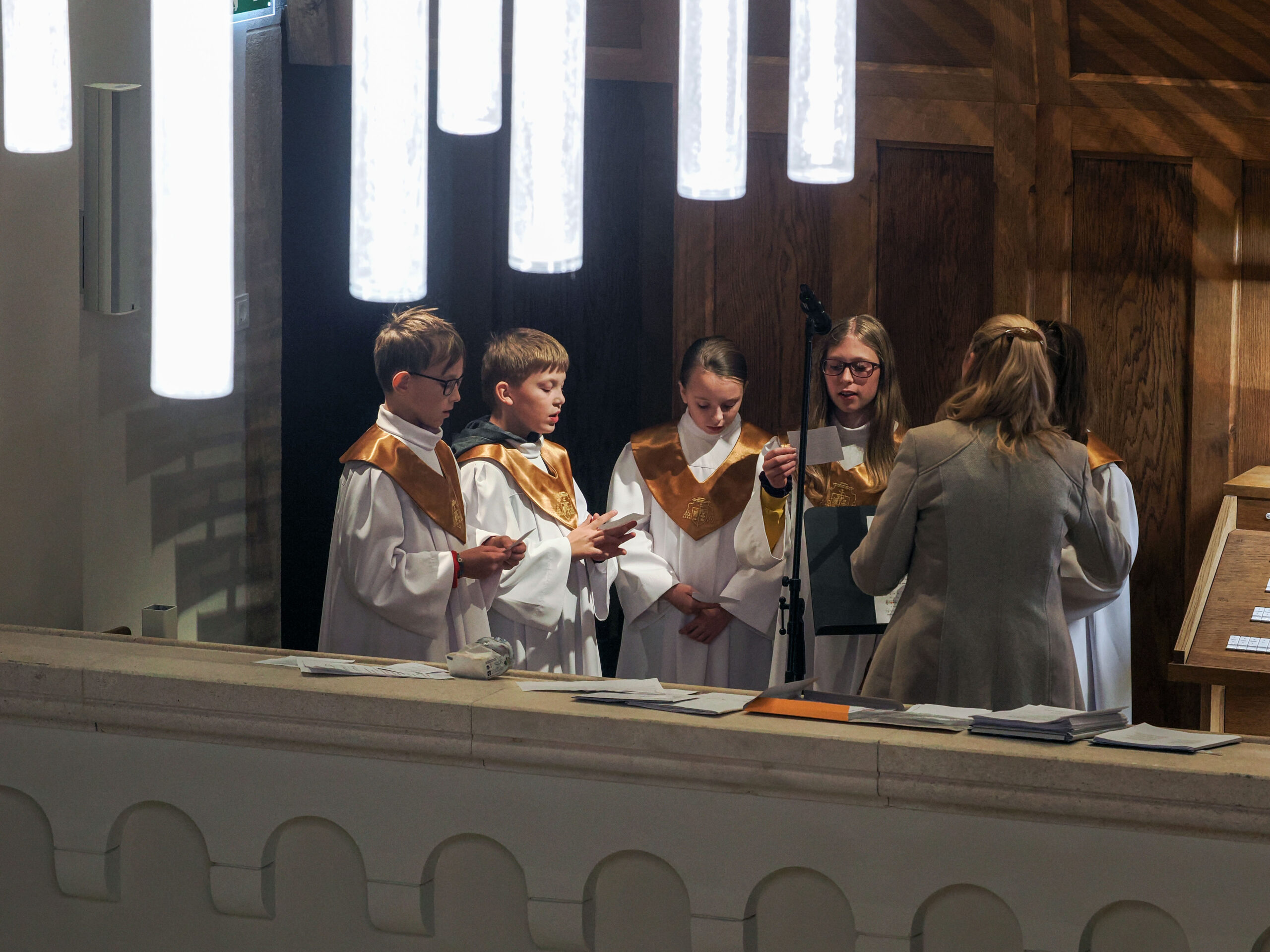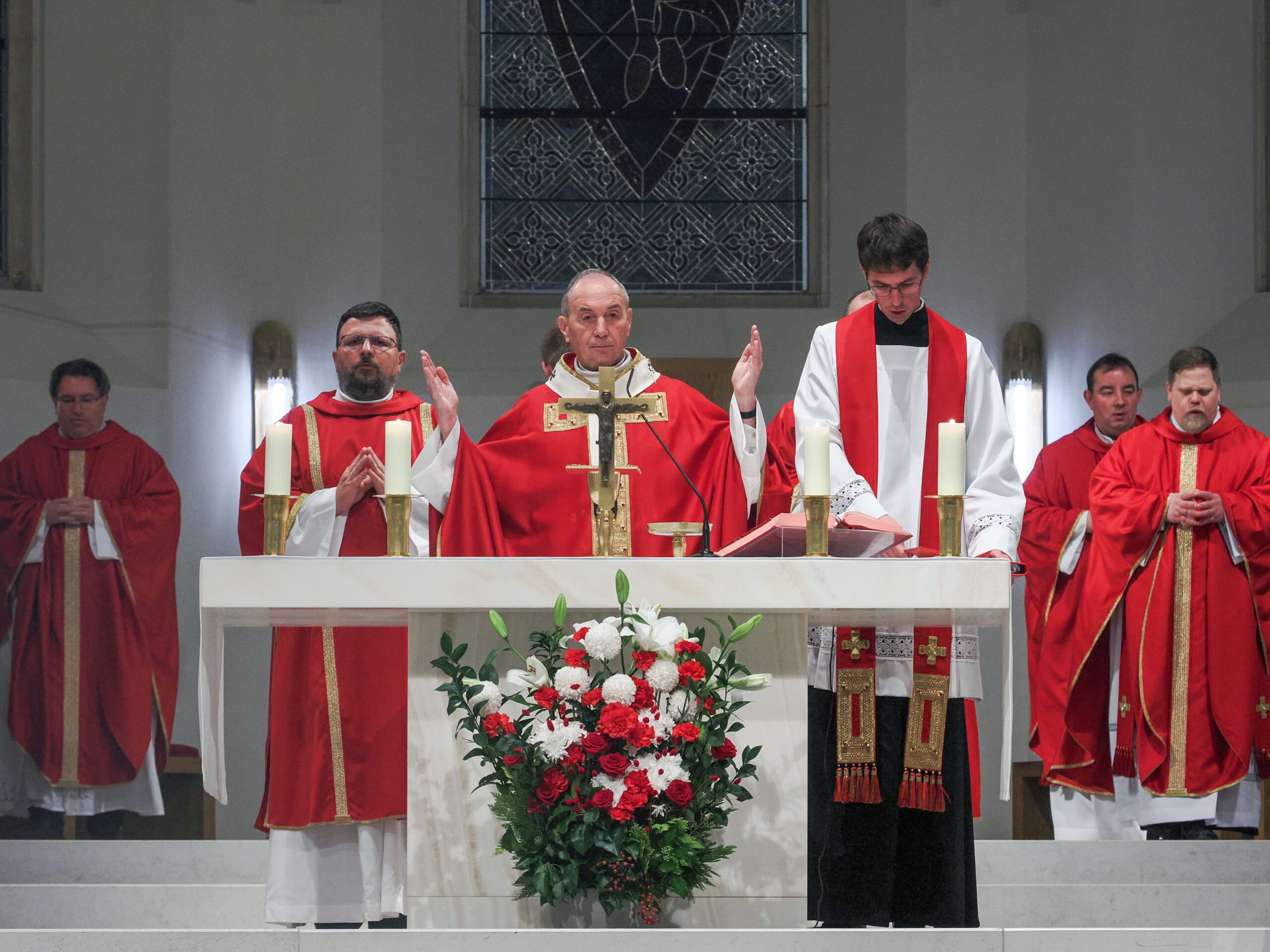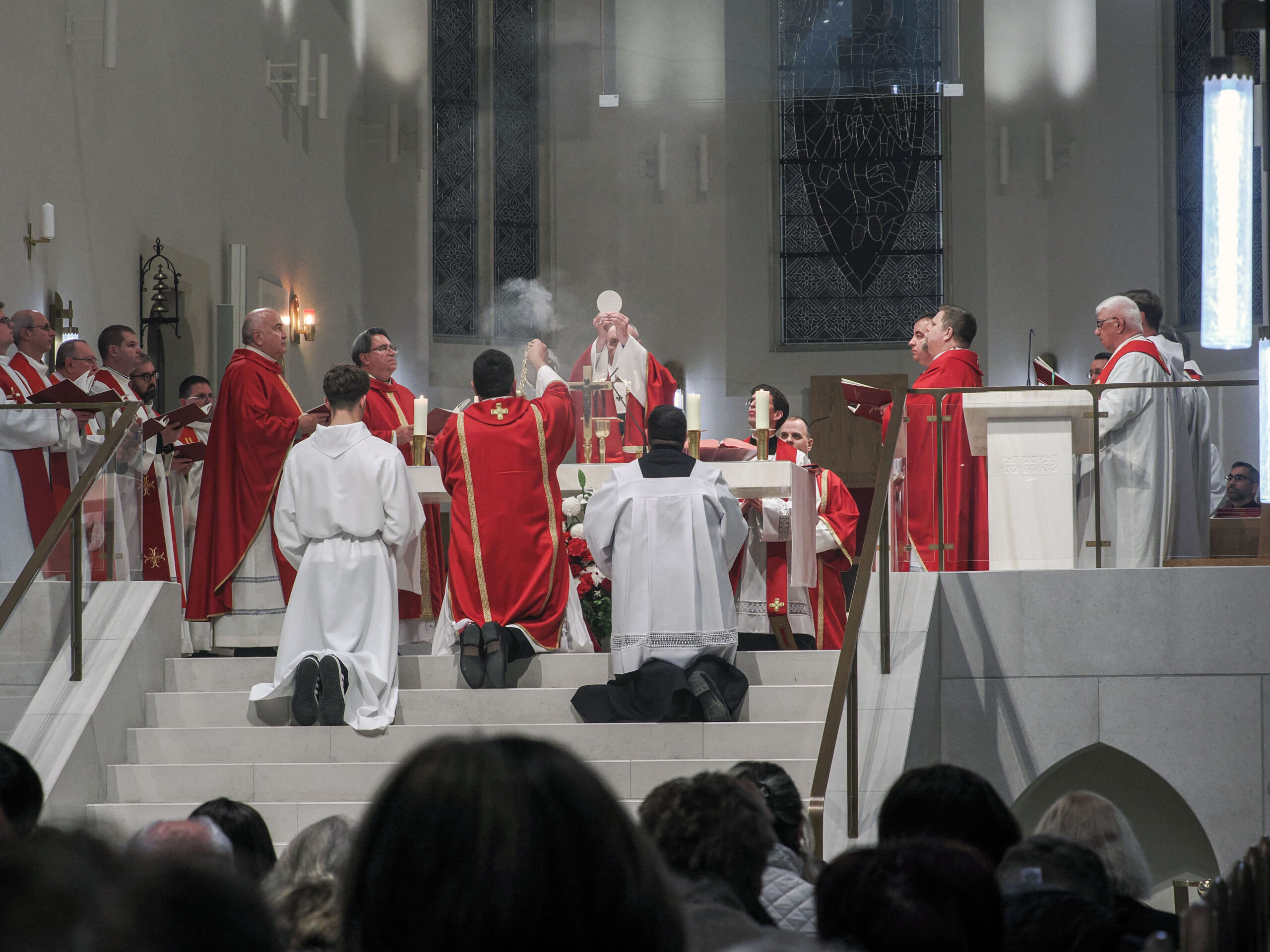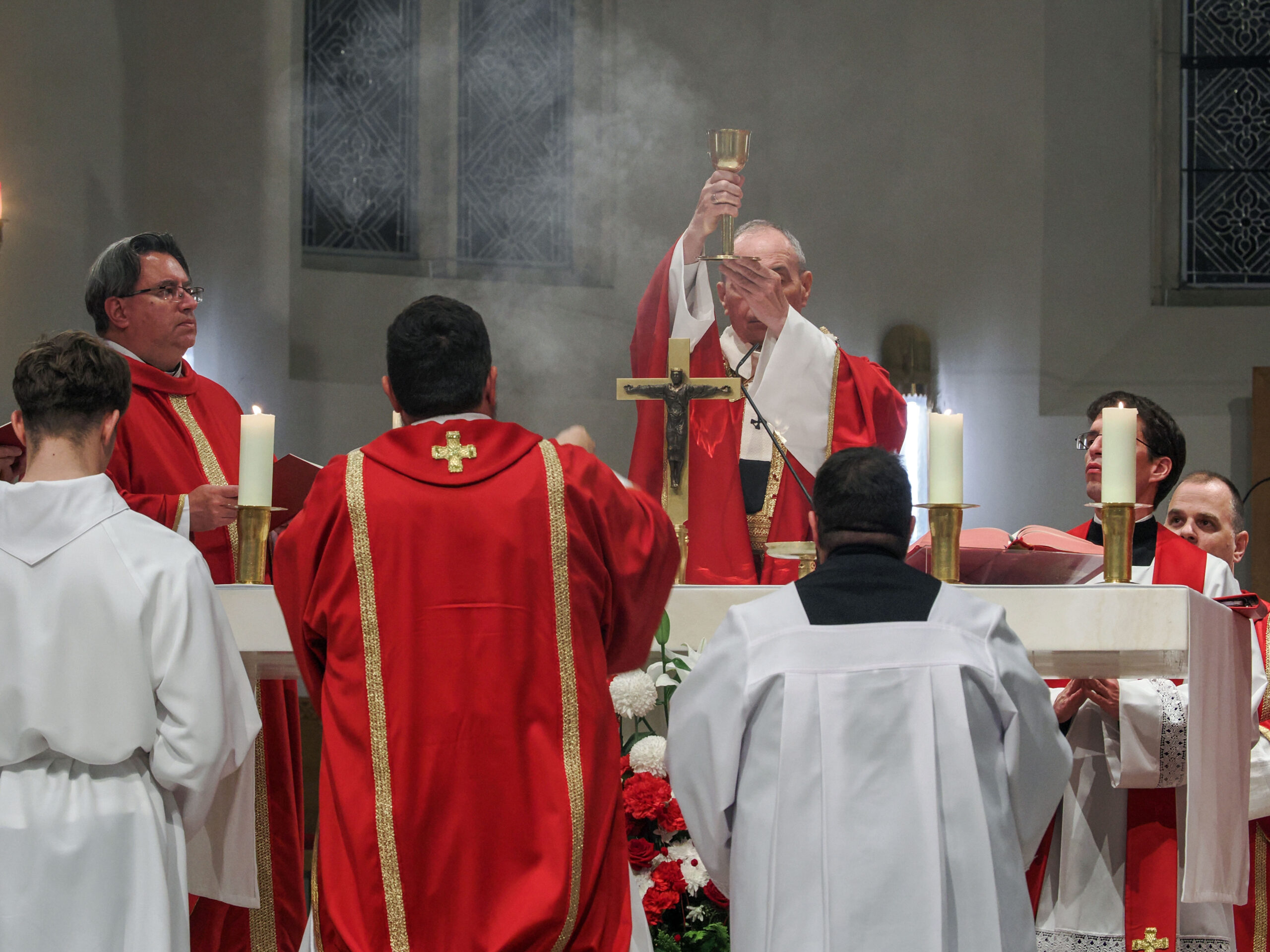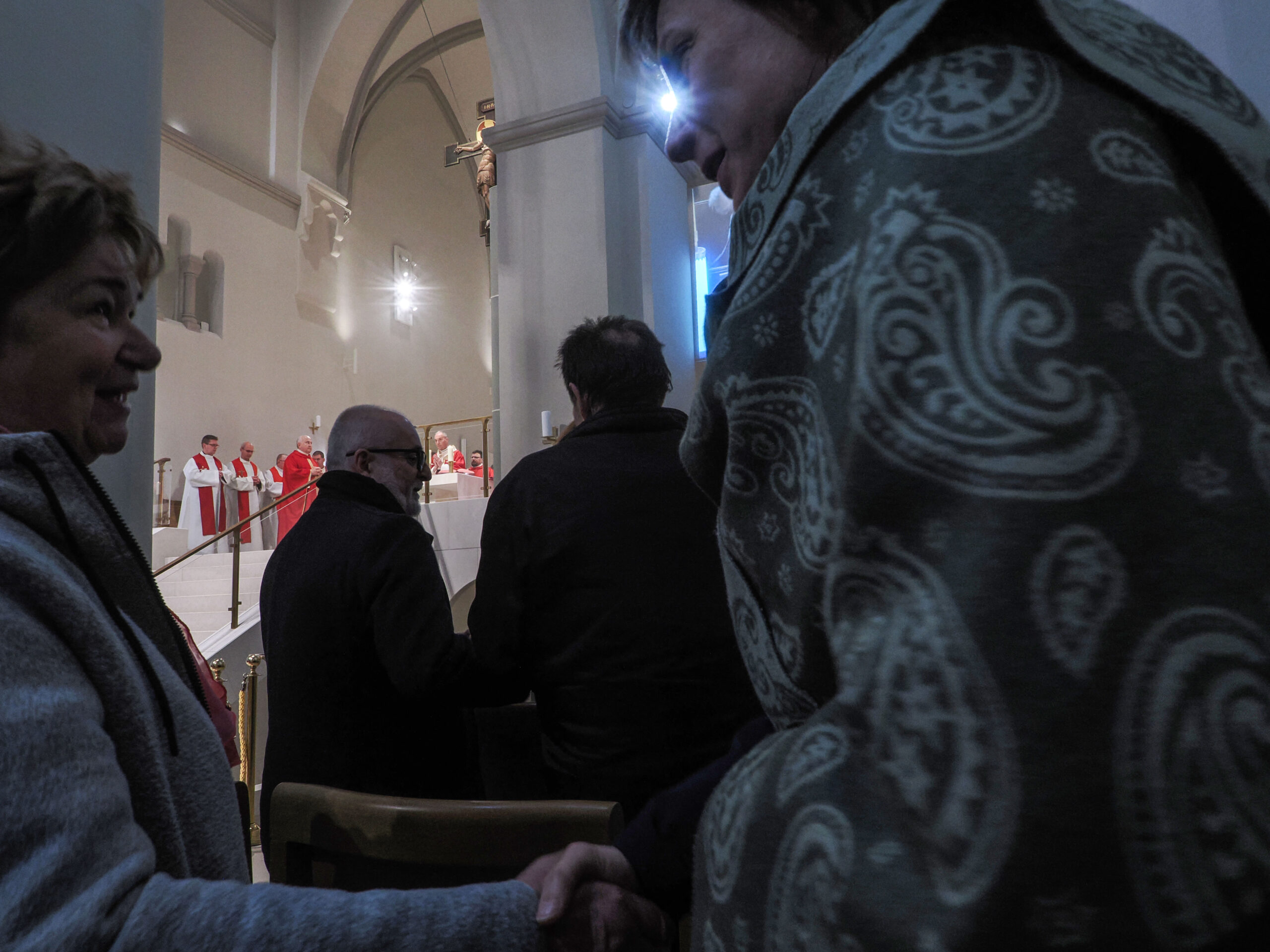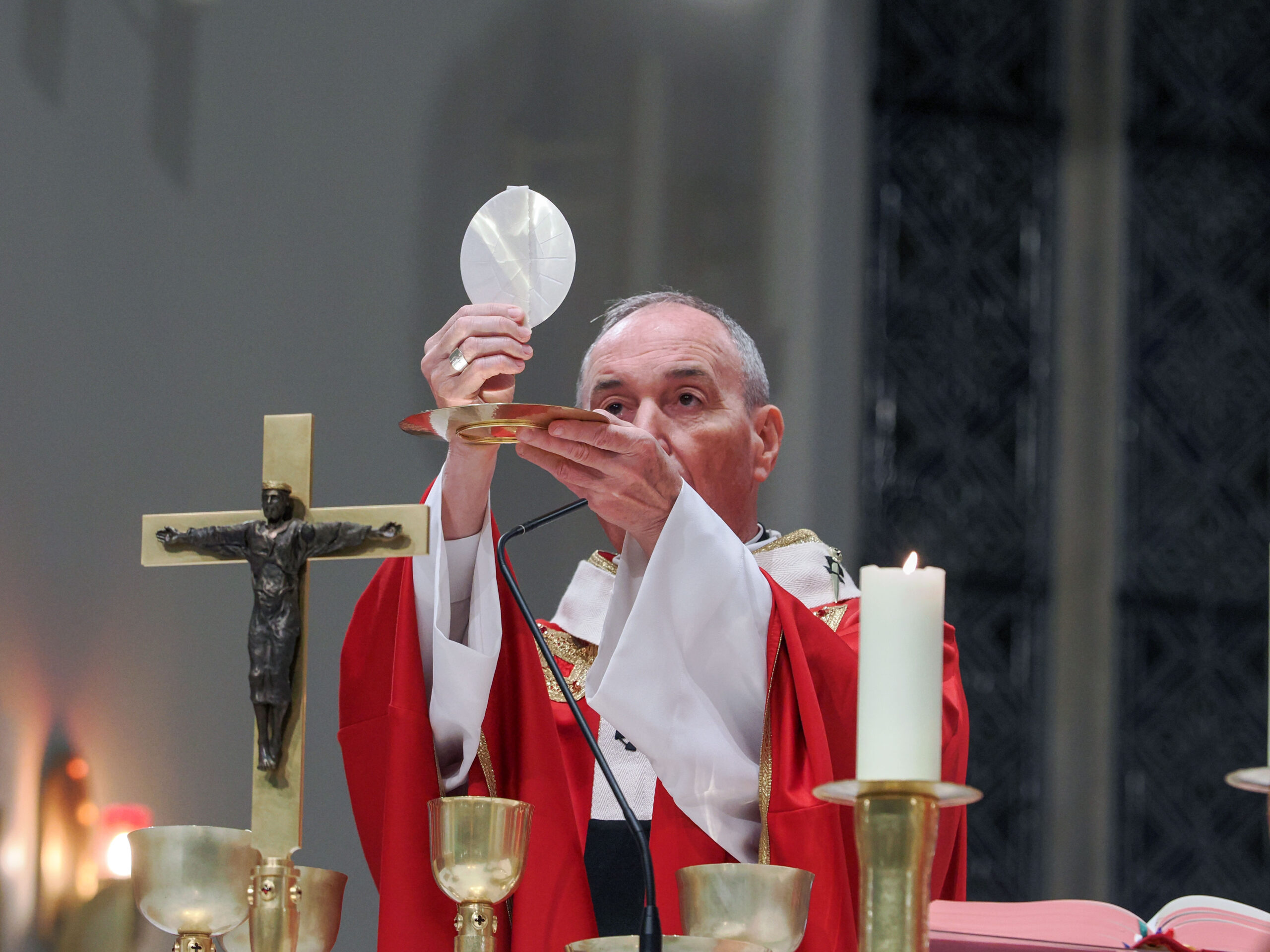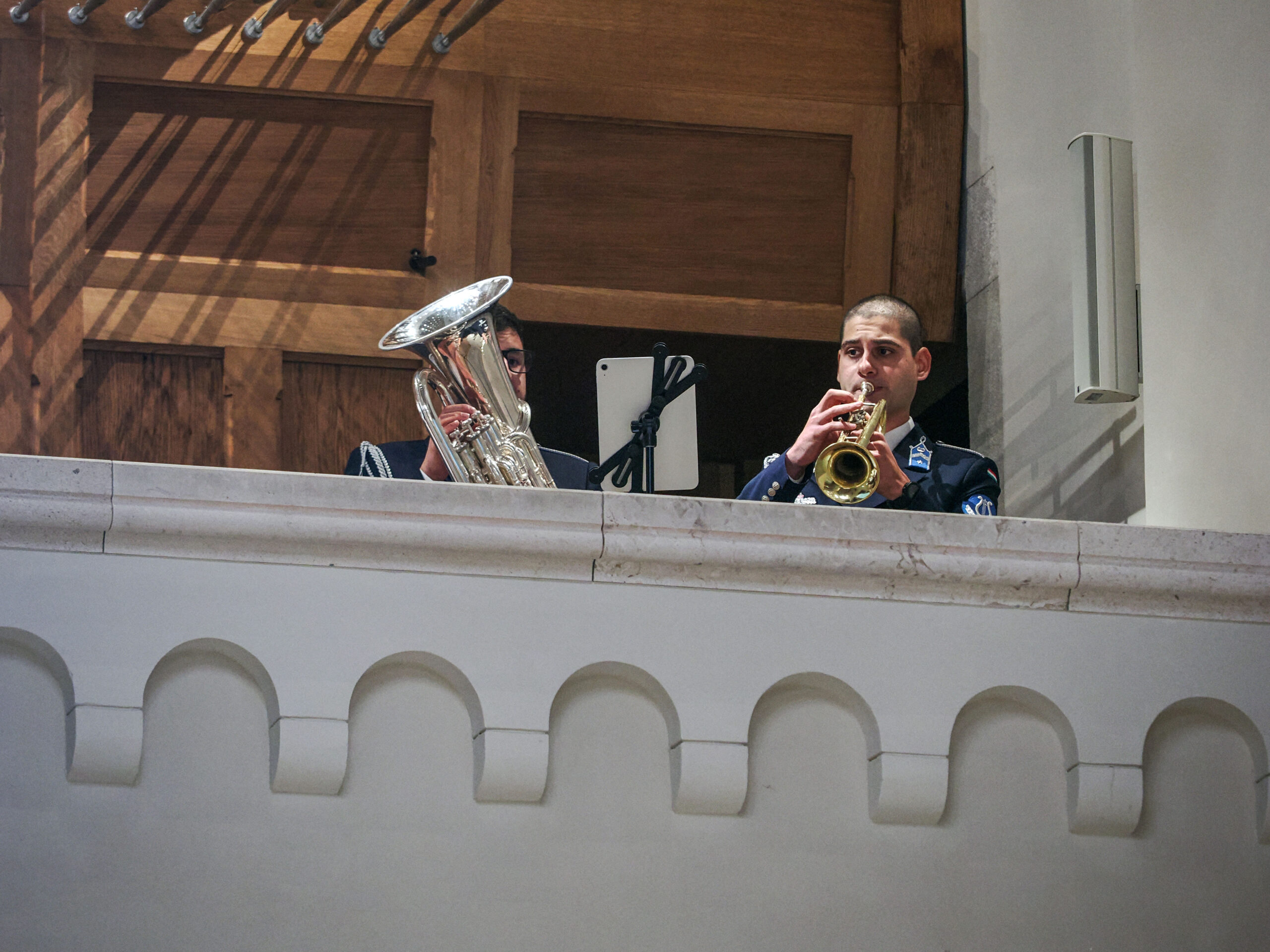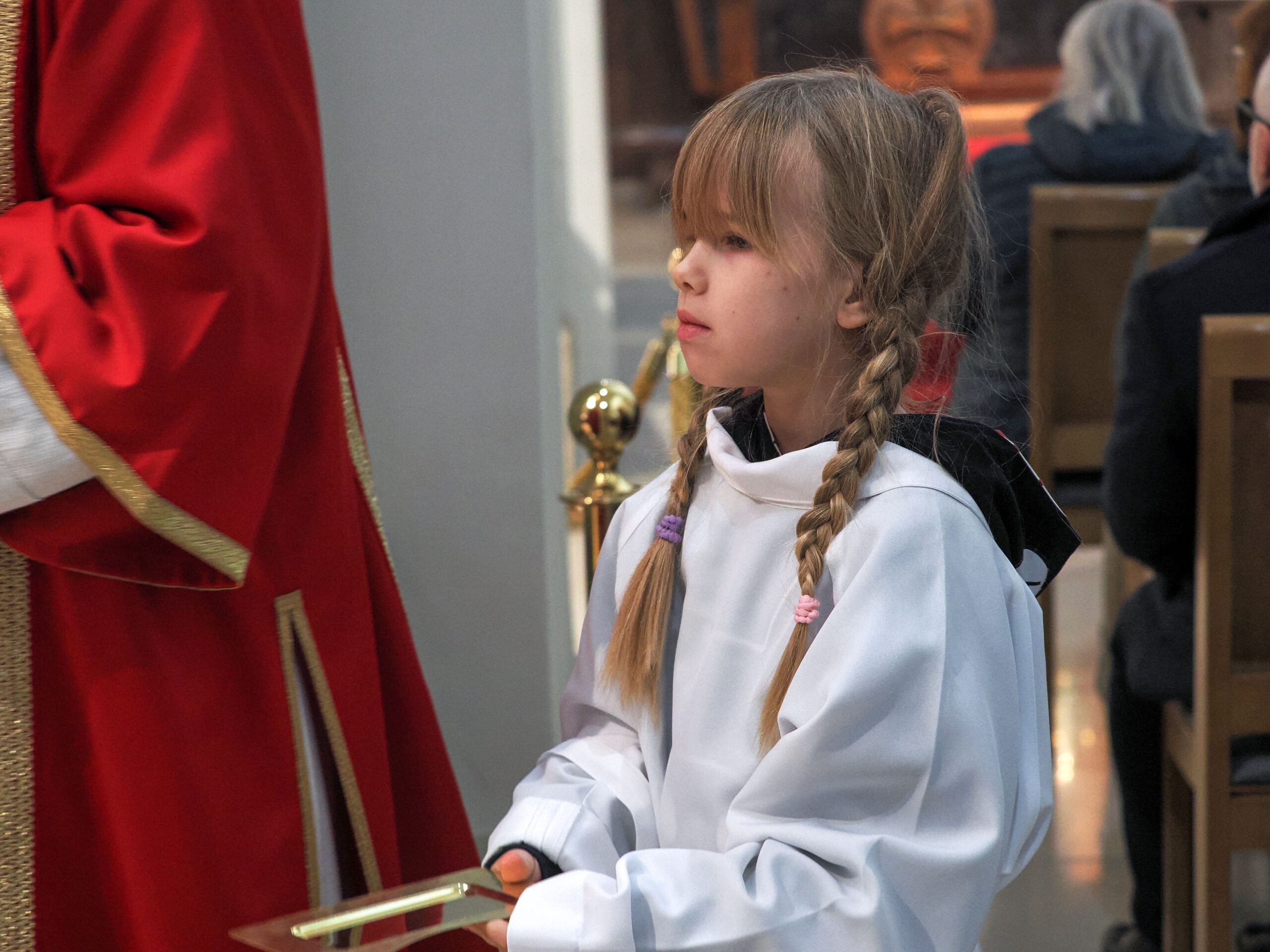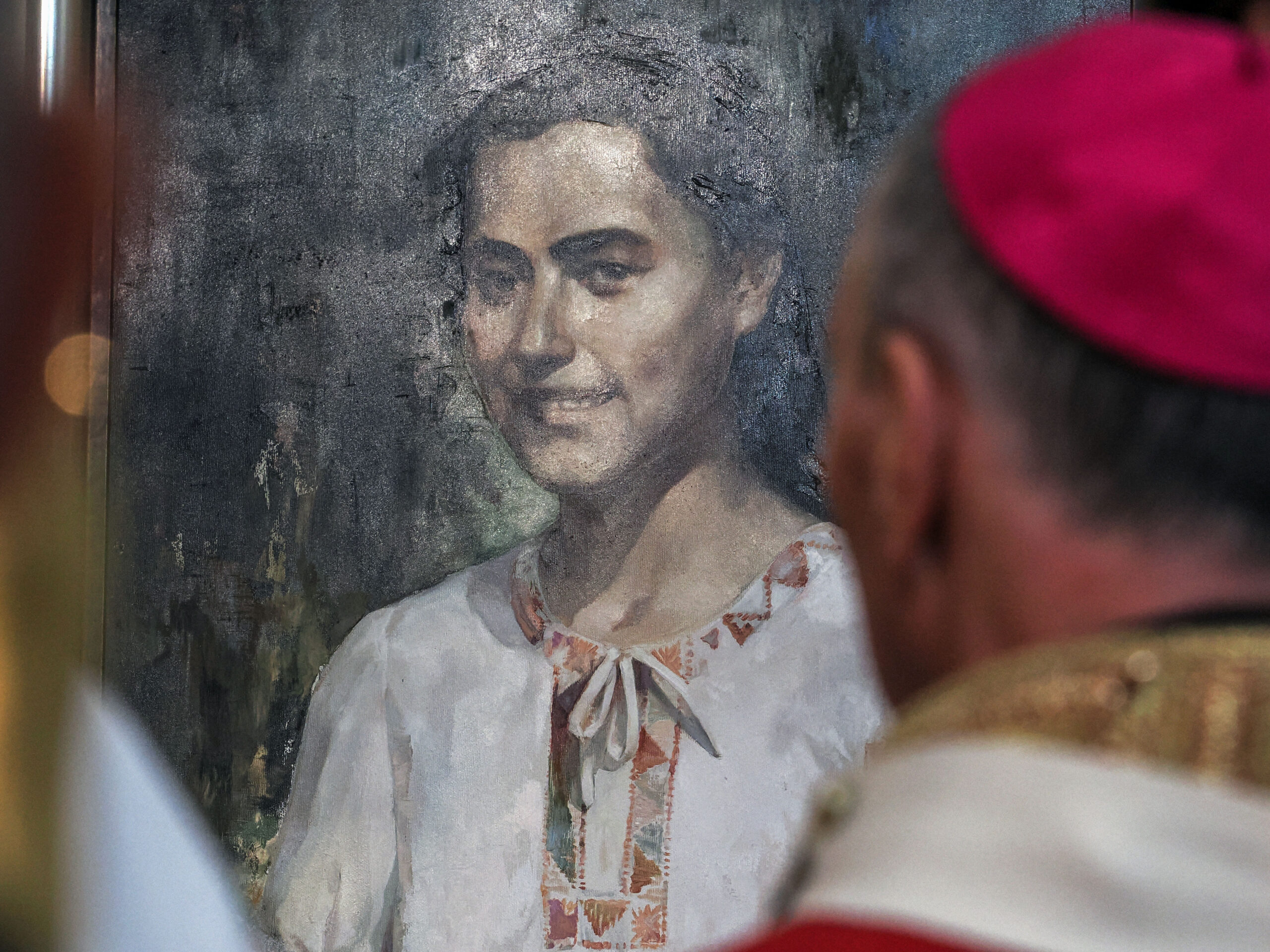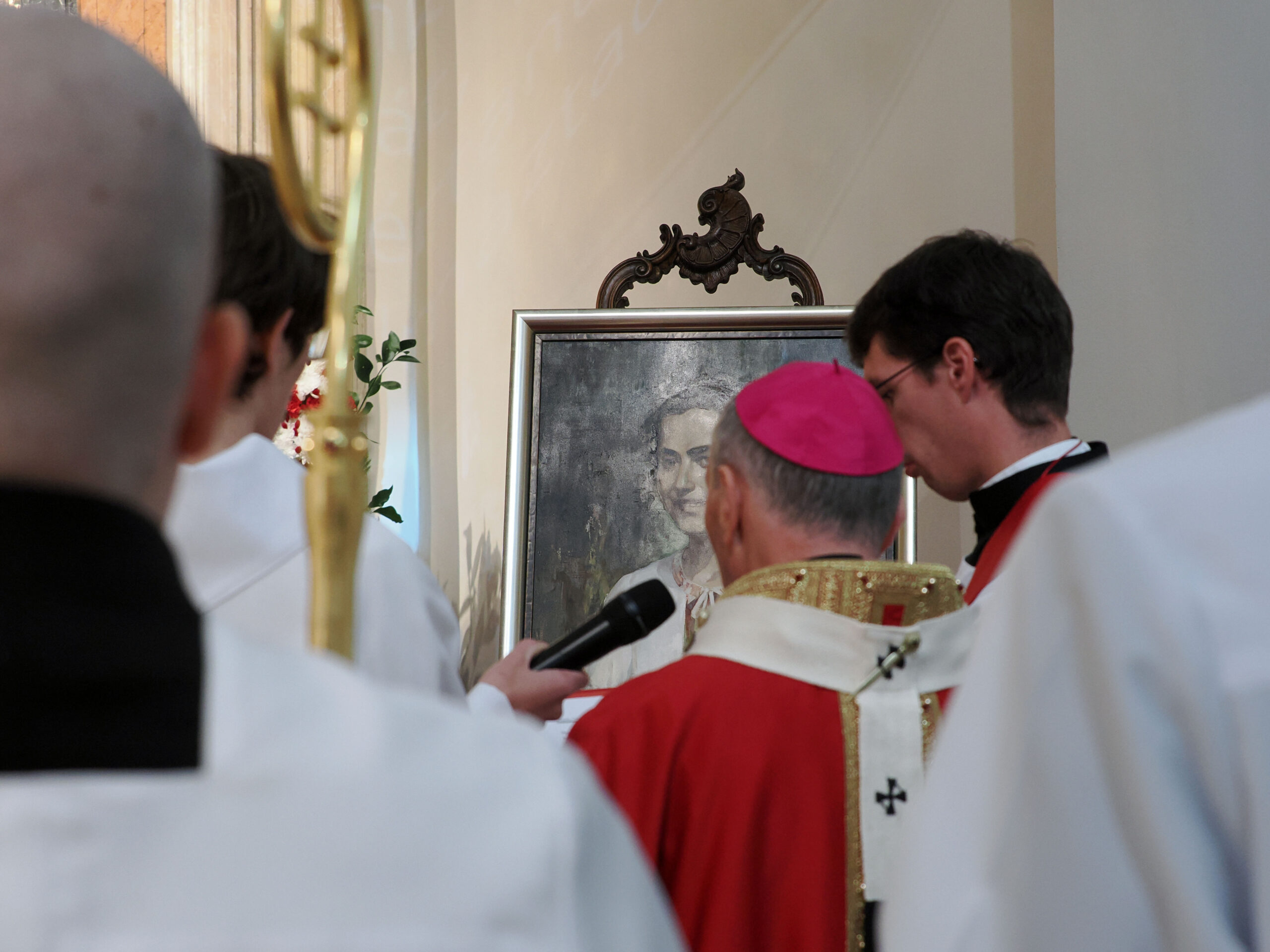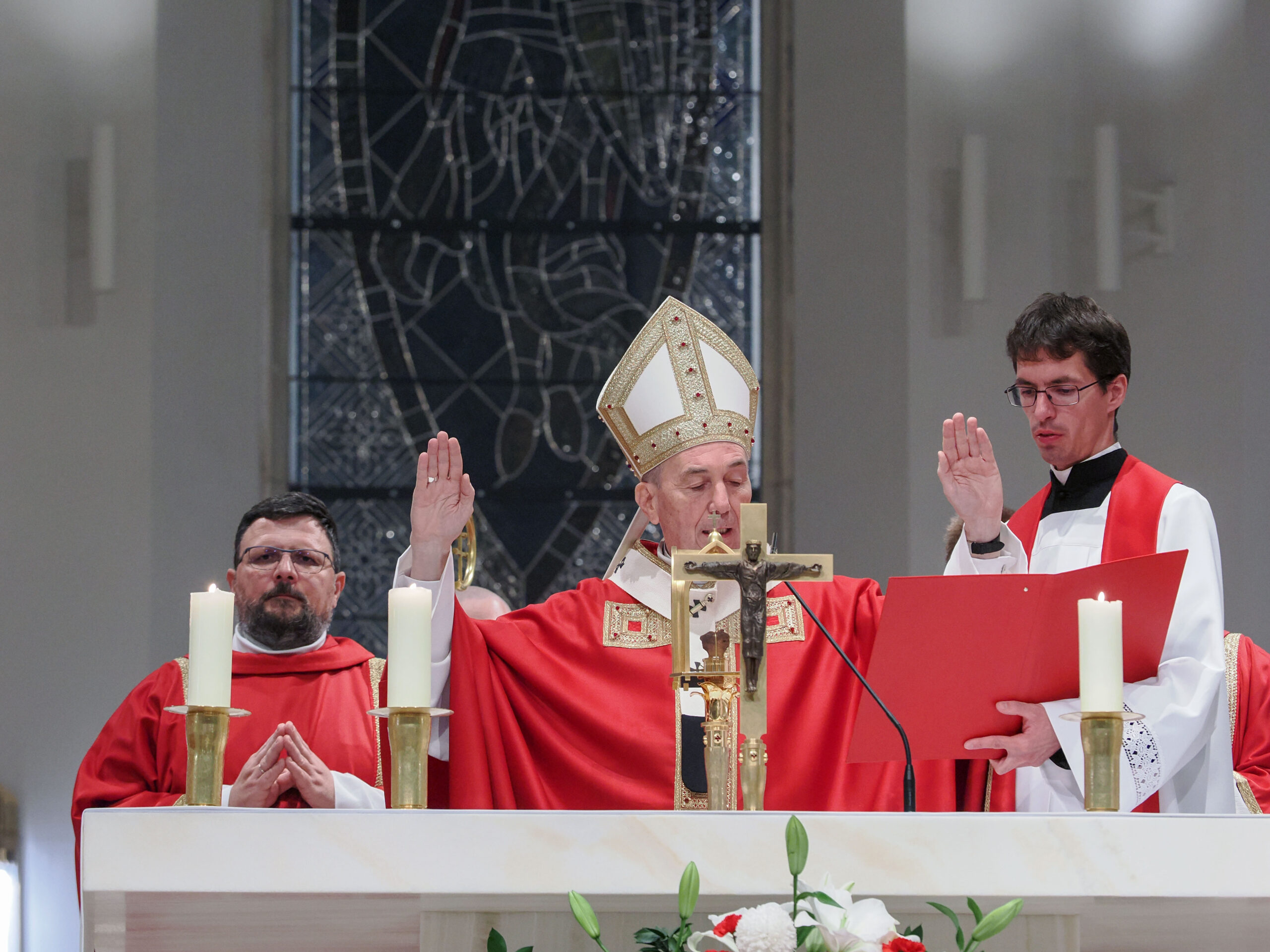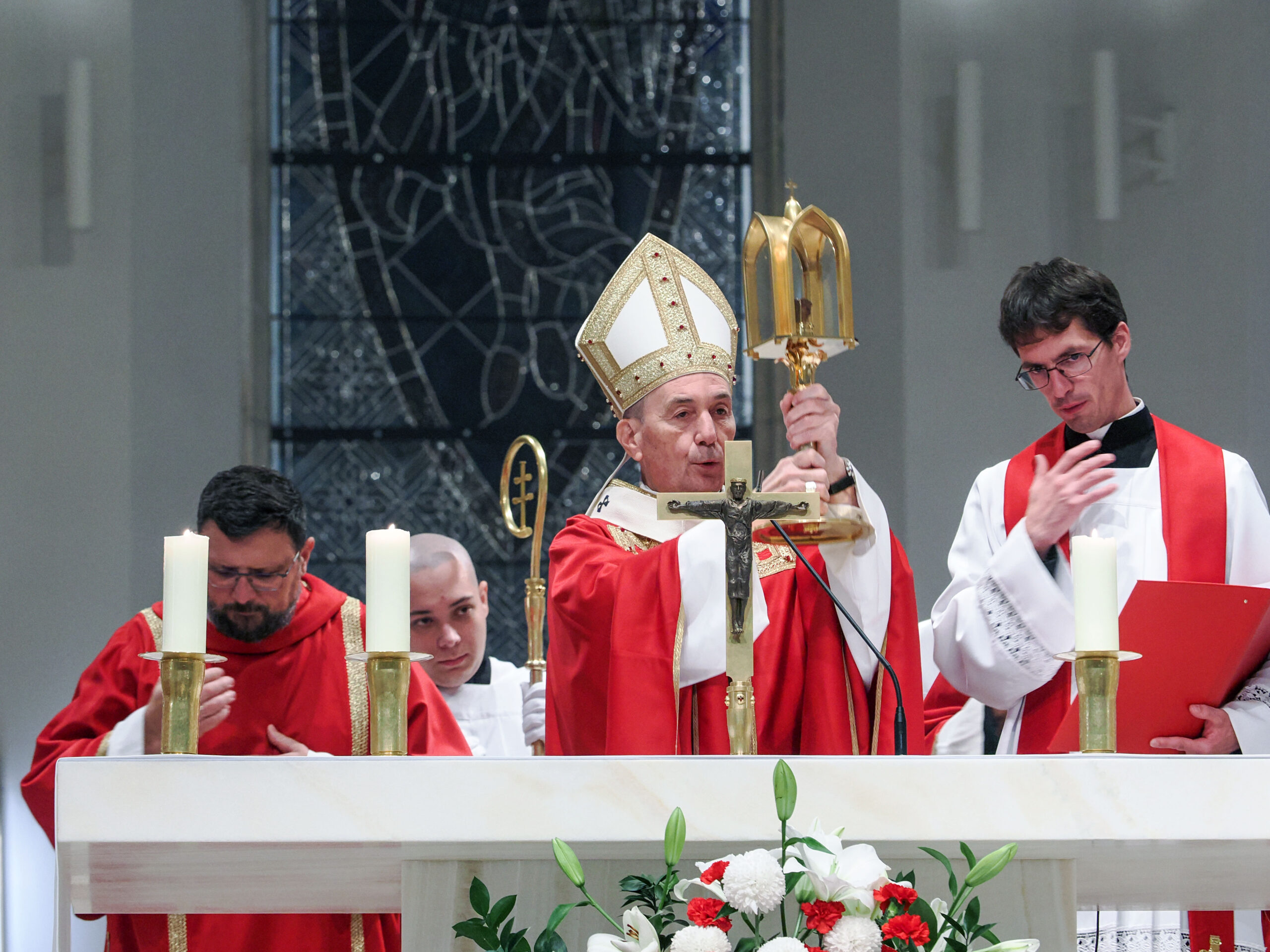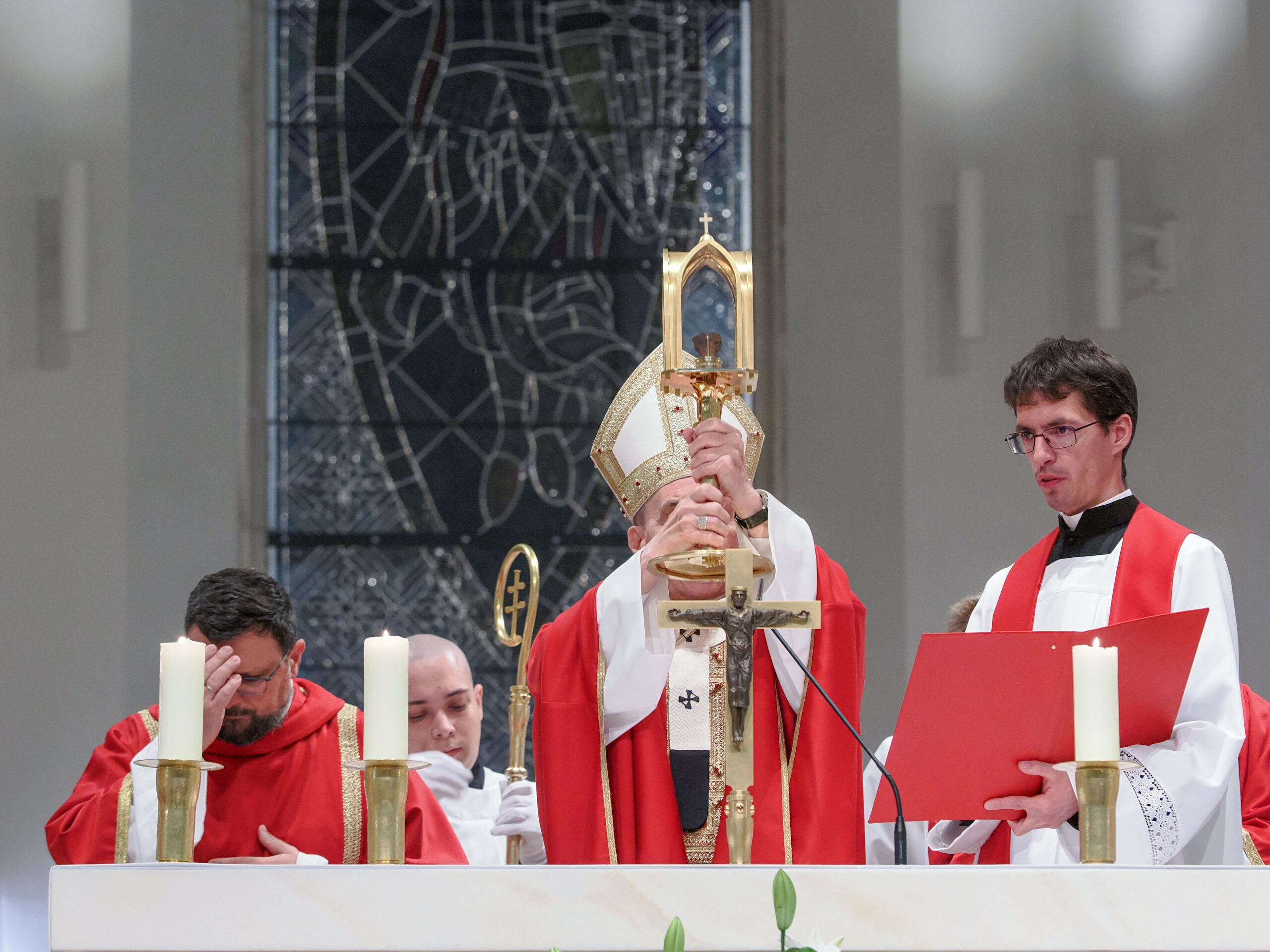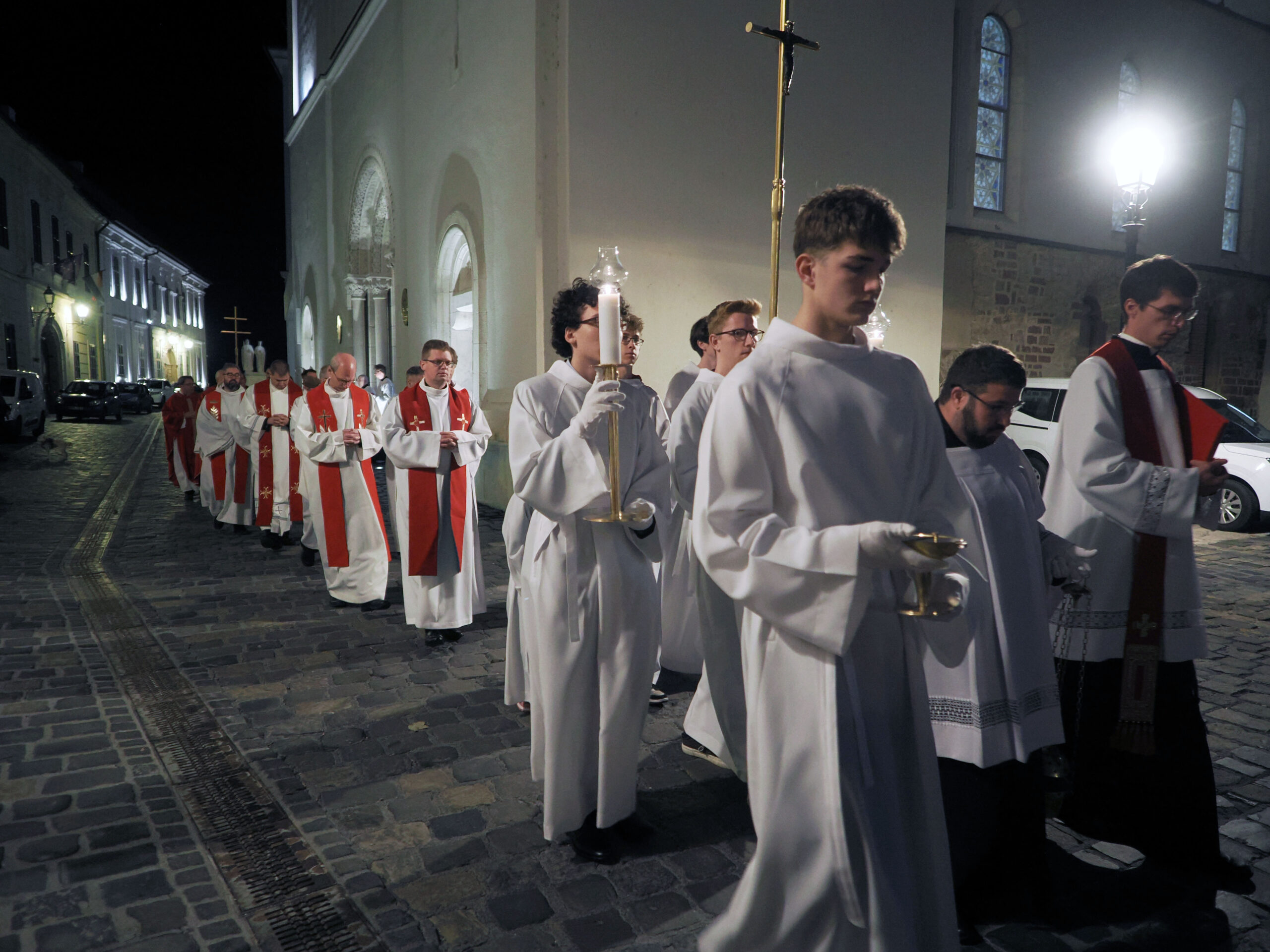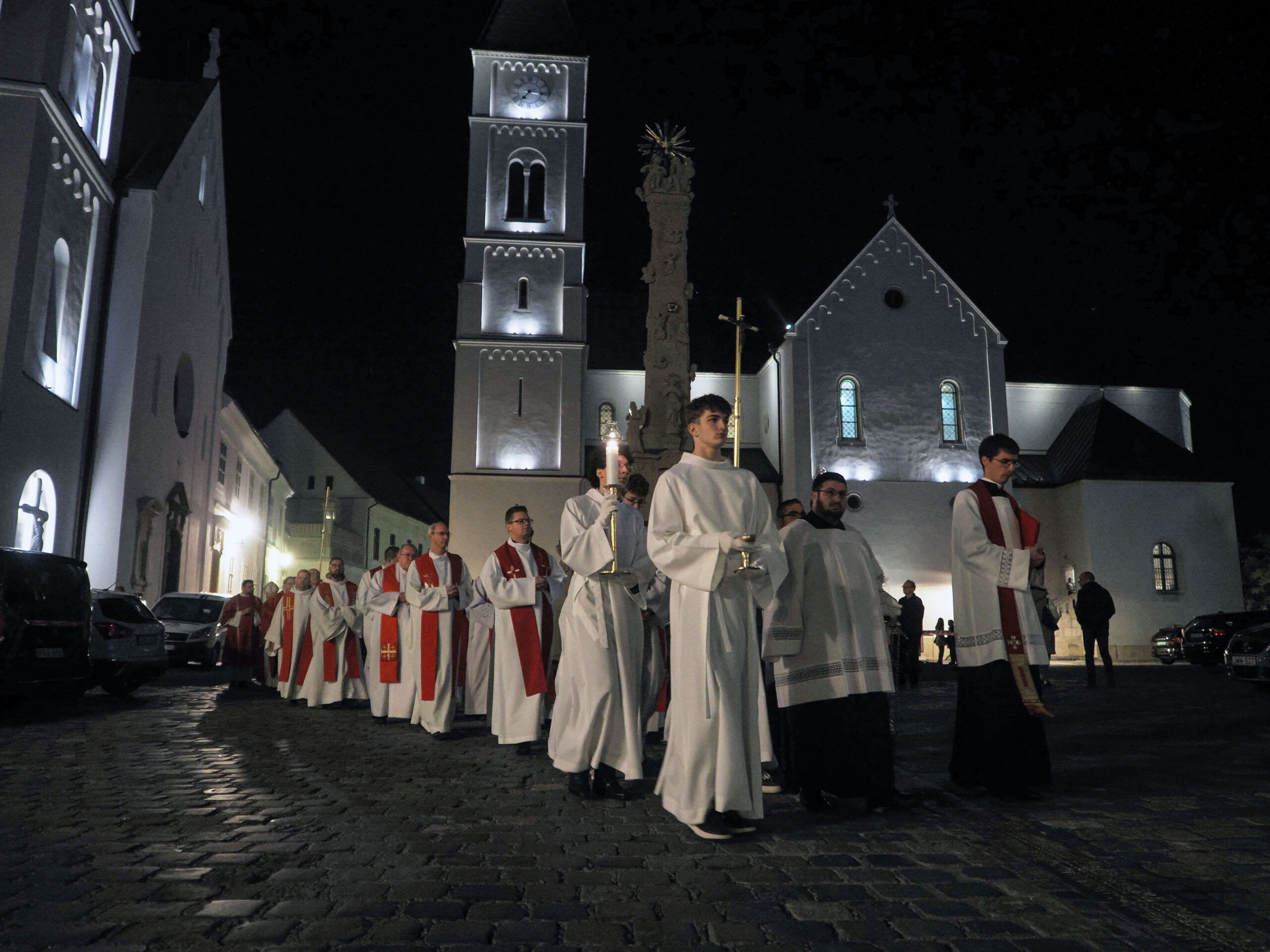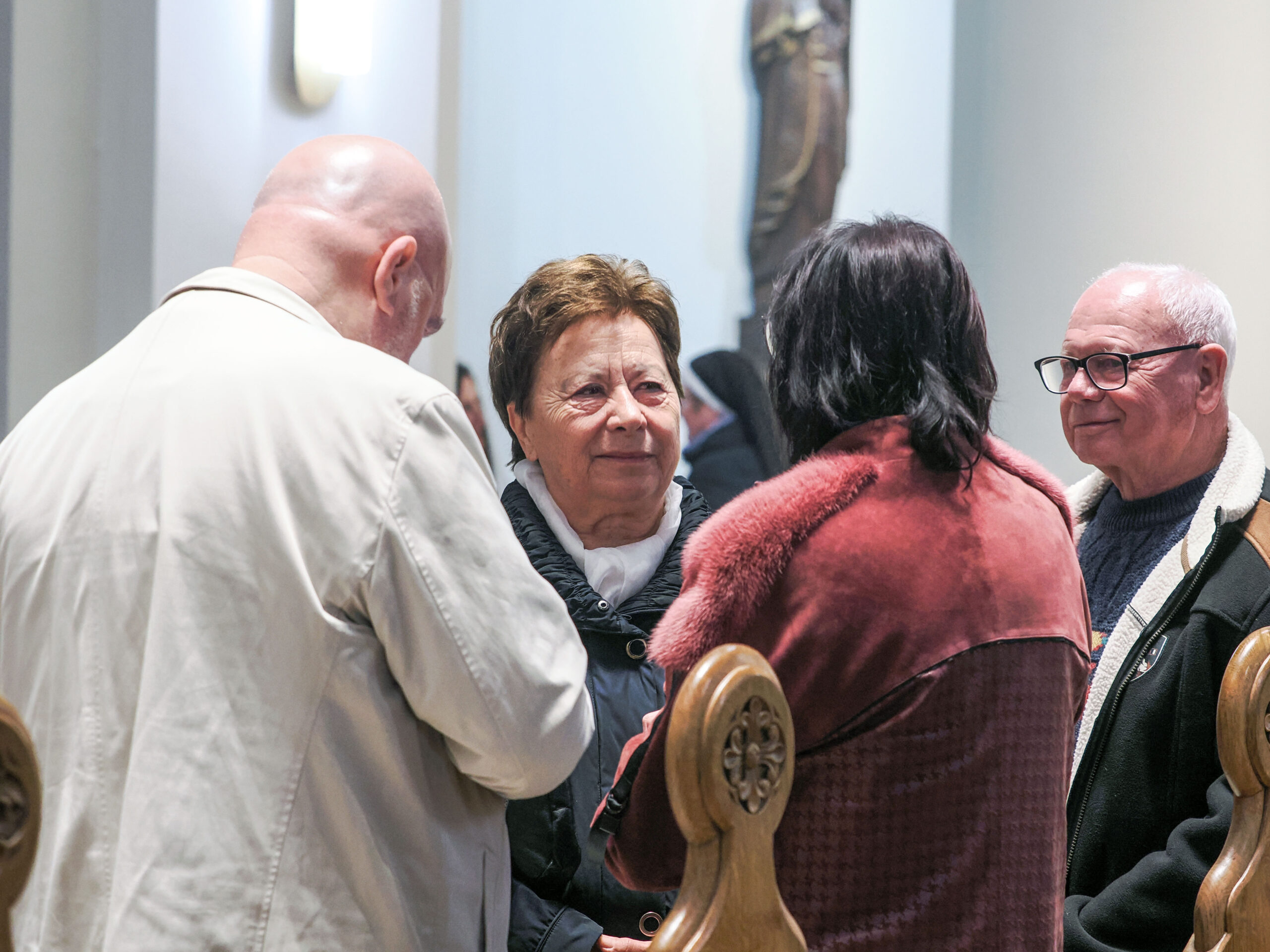


On 26 October, the Archdiocese of Veszprém commemorated the liturgical memorial of Blessed Mária Magdolna Bódi, Virgin and Martyr, with a solemn Holy Mass. The celebration took place at St Michael’s Cathedral in Veszprém and was presided over by Archbishop György Udvardy, together with numerous priests of the archdiocese. Deacons, members of religious communities, heads of institutions and many faithful also attended. Pilgrims from Pécel joined the congregation to give thanks for the life, witness and gift of intercession of the young martyr, who was beatified in September 2025.
26 October holds a special place in the life of Blessed Mária Magdolna Bódi. On this day in 1941, the Feast of Christ the King, inspired by a spiritual retreat in Pécel, she made a private vow of chastity, dedicating her life entirely to Christ. A few years later, on 23 March 1945, she sealed her fidelity with martyrdom.
Following her beatification in Veszprém on 6 September 2025, this year’s celebration on 26 October once again invited the faithful to reflect together on Magdi’s life and give thanks for the spiritual legacy that her example represents for the Church.
“We Want to Learn from Her Example”
At the beginning of the Holy Mass, Archbishop György Udvardy emphasised that the celebration was not merely an occasion for remembrance, but also an invitation to follow Christ.
“We commemorate Blessed Mária Magdolna, her beatification, and we want to learn from her example and follow her in her likeness to Christ.”
The Archbishop highlighted that, through her beatification, the Church had given the faithful a special gift: in Magdi, they now have an intercessor whose help they can confidently seek.
The Archbishop extended a special welcome to the priests, deacons, members of religious communities, heads of the archdiocese’s educational institutions and representatives of parish communities present at the celebration.
He warmly greeted Father László Berta, parish priest of Pécel, together with the Catholic school students, parents and teachers who had accompanied him.
The presence of the community from Pécel gave the celebration particular significance. Spiritual retreats associated with Pécel had played a decisive role in Magdi’s life, contributing to the deepening of her faith and her conscious dedication of her life to God.
The Grain of Wheat That Bears Abundant Fruit
In his homily following the Gospel, Archbishop György Udvardy reflected on the importance of responding personally to the Word of God.
He pointed out that, in the life of the young martyr, the message of the Gospel did not remain something merely heard. Instead, it became a series of concrete decisions, acts of service and, ultimately, complete self-giving.
The Archbishop placed the parable of the grain of wheat at the centre of his reflection. He emphasised that sacrifice freely undertaken out of selfless love does not diminish human life, but bears abundant fruit.
In Magdi’s life, this fruitfulness was already evident in her vow of chastity, her service to young people and her love for others. It found its ultimate fulfilment in her martyrdom.
Archbishop Udvardy reminded the congregation that the veneration of saints and blesseds is closely connected to one of the fundamental truths of the Christian faith: the communion of saints.
The Church looks to them as examples not only because they lived extraordinary lives, but also because the transforming power of God became visible in them.
Christlike virtues are not abstract ideals. They are expressed through concrete decisions in everyday situations, in which a person chooses, again and again, to remain faithful to Christ.
Fidelity in a World Marked by Uncertainty
The Archbishop placed particular emphasis on the radical nature of Magdi’s decision.
During the final period of the Second World War, when most people were struggling simply to survive, the young woman refused to abandon what she had dedicated to Christ, even in the most difficult circumstances.
Archbishop Udvardy explained that Magdi did not wish to belong to Christ only under certain conditions or to a limited extent. Her commitment was complete and irrevocable.
This fidelity continues to speak to Christians today. According to the Archbishop, there is a particular need for examples that help people recognise the value of a virtuous life and give them the courage to avoid compromises that lead them away from the fullness of life.
He emphasised that the example of the saints and blesseds directs our attention not only towards the values of earthly life, but also towards the hope of the Resurrection and eternal life.
It was this hope that enabled Magdi to give herself completely to Christ. The same hope can strengthen Christians today in their daily decisions, in facing difficulties and in remaining faithful.
“She Teaches Us How to Live”
One of the most moving reflections in the homily was the Archbishop’s reminder that Blessed Mária Magdolna does more than invite us to remember her: she also teaches us how to live.
Her example shows how human dignity can be preserved even in degrading circumstances, how life can be lived with joy and in service to others, and how faith can become a force that shapes everyday existence.
For Magdi, belonging to Christ did not mean fear or withdrawal from the world. It meant freedom, love and openness towards others.
The Archbishop also pointed out that the life of a Christian should itself become a form of witness — a life that prompts others to ask where such hope, trust and joy come from.
The example of the saints helps us in precisely this way. It reveals that God’s grace can transform a person and open new possibilities even where the world sees only limitations and difficulties.
Magdi’s Legacy in the Renewal of the Archdiocese
In his homily, Archbishop György Udvardy also reflected on the pastoral life of the Archdiocese of Veszprém.
He recalled the initiatives and formation programmes that, both during the preparations for the beatification and afterwards, have sought to strengthen communities and encourage a more conscious commitment to Christ.
Among these, he mentioned meetings with members of parish pastoral councils, the formation of liturgical ministers, the development of Caritas groups, continuing formation for catechists, the strengthening of the prayer alliance, as well as the importance of the School of Prayer and biblical formation programmes.
The Archbishop explained that the archdiocese is working on a pastoral programme looking several years ahead, intended to support community life and various forms of formation.
He stressed that, amid changing social circumstances, the Church must continue to seek appropriate ways of proclaiming the Gospel.
In this work, Blessed Mária Magdolna is present not only as an example to follow, but also as a source of spiritual support.
The Archbishop spoke with joy about how close Magdi’s example has become to young people, who readily understand the clarity and consistency of her commitment to Christ.
Among families, growing participation in the prayer alliance also shows that devotion to her is finding a place in the lives of an increasing number of communities.
Looking ahead to the coming year, when the archdiocese will celebrate a Year of Vocations, the Archbishop invited the faithful to seek Magdi’s intercession and pray for priestly and religious vocations, as well as for the strengthening of the vocation to family life.
Prayer Before Magdi’s Relic
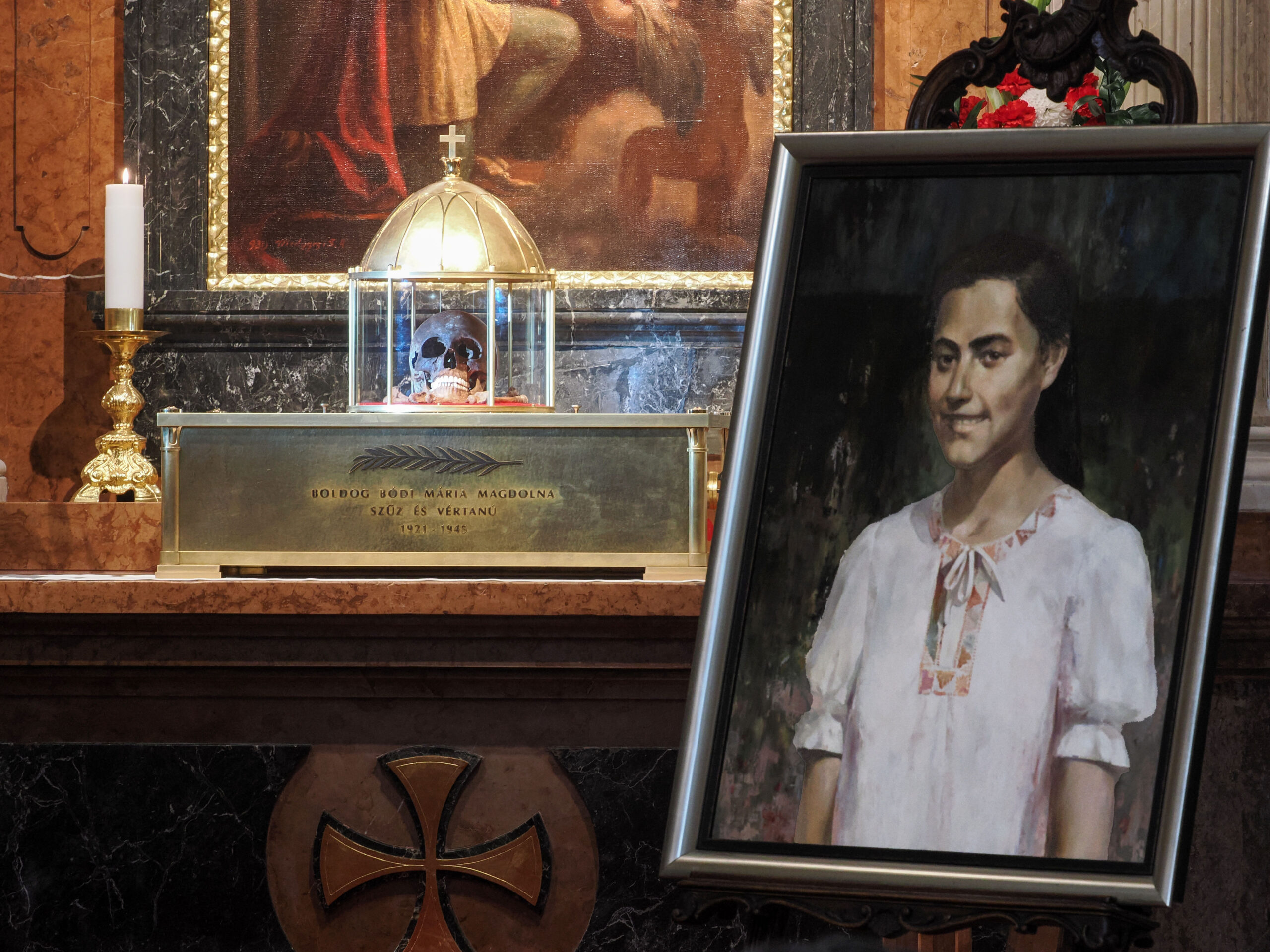
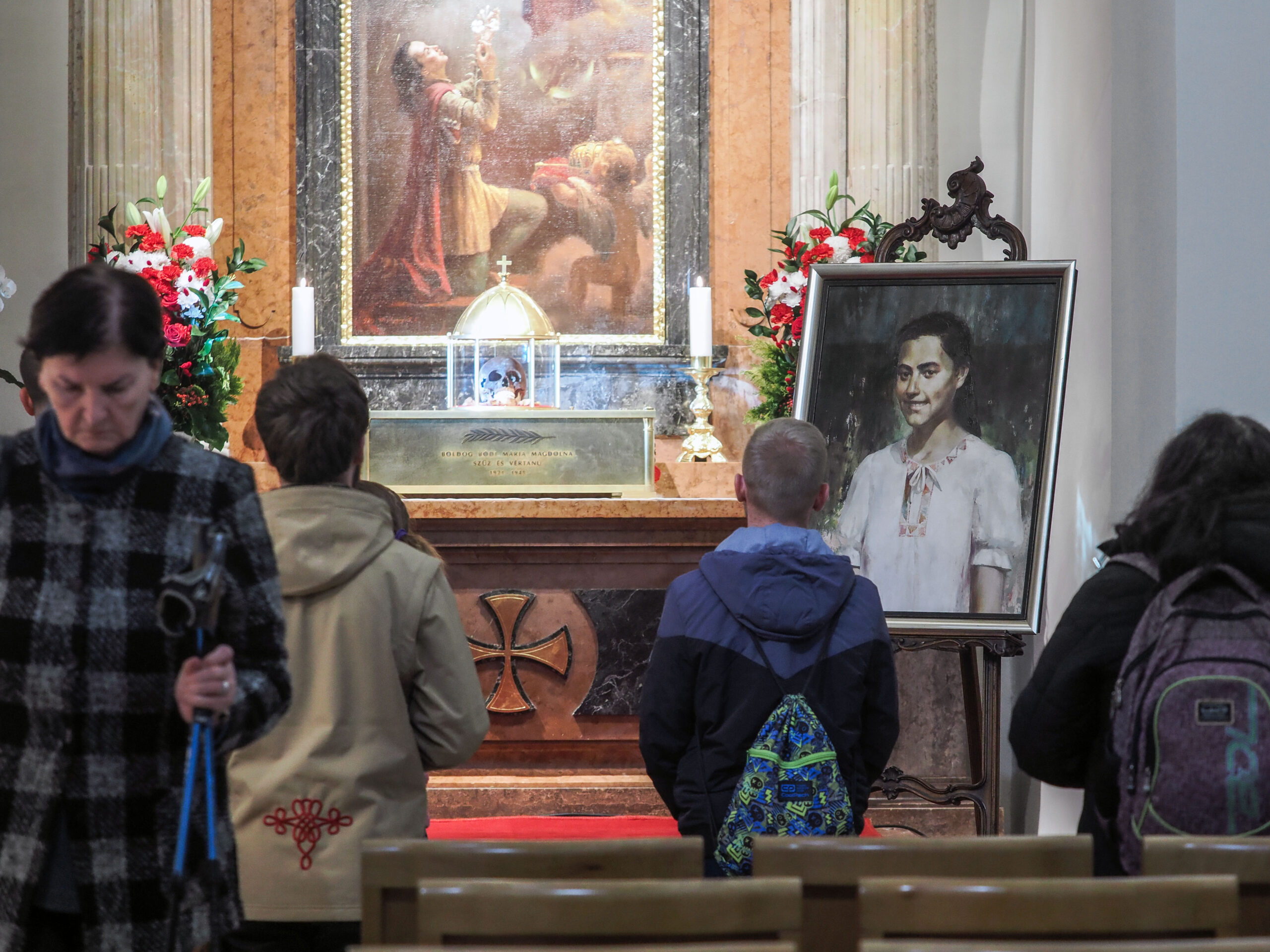
At the conclusion of the solemn Holy Mass, before the final blessing, the Archbishop invited those present to express their veneration together before the relic of Blessed Mária Magdolna Bódi.
Gathered before the relic placed on the Altar of St Emeric in St Michael’s Cathedral, the congregation prayed together, asking for the young martyr’s intercession.
This prayer expressed the central message of the celebration: beatification is not the end of a story, but an invitation for the faithful to continue discovering, following and embodying Magdi’s fidelity to Christ in their own lives.
Following the communal prayer, the Holy Mass concluded with the solemn blessing imparted by Archbishop György Udvardy.
The celebration on 26 October reaffirmed that the legacy of Blessed Mária Magdolna Bódi remains a living gift to the Archdiocese of Veszprém and to the entire Church.
The young martyr’s life calls us to make our faith visible not merely through words, but through love, service, joy and fidelity to Christ.
Prayer for the Canonisation of Blessed Mária Magdolna Bódi
Heavenly Father, You granted Blessed Mária Magdolna the grace to open her heart to our Lord Jesus Christ, to receive His teaching, and to offer her life entirely to Him as her Lord and King.
At a young age, she experienced the joy of encountering Your Son. With joy and courage, she proclaimed the Gospel and served Him among the vulnerable, young people and workers.
You rewarded her dedication, purity of life and fidelity with the crown of martyrdom.
Through her intercession, grant that we too may follow Your call with all our hearts, serve You with joy, and attain the blessedness promised to the pure of heart.
Our provident and loving Father, we ask You to grant that Magdi may soon be venerated among Your saints.
Through our Lord Jesus Christ, Your Son, who lives and reigns with You in the unity of the Holy Spirit, God, for ever and ever.
Amen.